
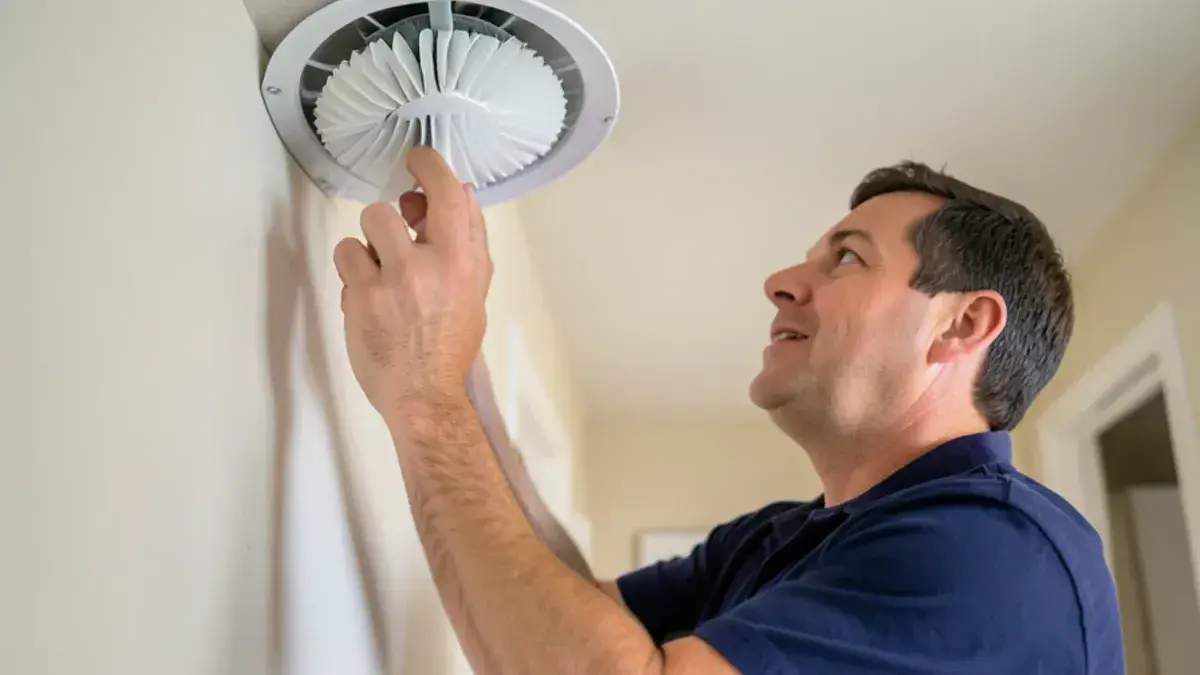
Prevention checklists
How Often Should You Change Your HVAC Filter?
How often to change an HVAC filter depends on the filter and the house, so check it monthly and change it when it looks dirty. EPA notes that manufacturers typically recommend every 60 to 90 days. Thin filters, pets and smoky weeks shorten that schedule, and a thick media filter can stretch it.
- CSLB C-20 #776028
- 4.8 from 16 Google reviews
- Shop in USA Business Park
- Open Mon to Sat, 9 to 5
By Proair Air Conditioning Services, CSLB C-20 License #776028. Published October 30, 2026. Updated October 30, 2026.
How often should you change your HVAC filter, by situation?
Use this table as a starting schedule, then adjust it to what you see on the filter. Your equipment manual and the filter maker come first. ENERGY STAR advises checking every month, and that one habit fixes most filter problems.
| Situation | Starting schedule | Why |
|---|---|---|
| Standard 1-inch pleated | Check monthly, plan on 60 to 90 days | This matches the range EPA says manufacturers typically give |
| Basic fiberglass 1-inch | Check monthly, expect a shorter life | Thin media with little surface loads fast |
| Deep media filter, 3 to 5 inch | Follow the maker, often longer | More pleats give dust more surface |
| MERV 13 in a 1-inch slot | Check monthly, change early | Denser media loads and restricts sooner |
| Dogs, cats or heavy shedding | Check every 2 to 4 weeks | Hair and dander coat the surface |
| Wildfire smoke event | Check every few days | EPA says replace when dark brown or black |
| Renovation dust | Check weekly while work runs | Drywall dust clogs media quickly |
Filters clogging fast in your home? Call us.
A filter that loads in days can point to duct leaks or a filter the system cannot handle. Ask for a clear, upfront quote.
- CSLB C-20 #776028
- 4.8 from 16 Google reviews
- Shop in USA Business Park
- Open Mon to Sat, 9 to 5
Why does the calendar only get you part of the way?
EPA says a filter works only when the system is running. South Gate's mild weather means many systems sit idle for weeks in spring and fall, then run for long stretches during a hot spell. A filter on a 90-day calendar can go nearly unused through a mild month, or load up quickly in a hot one.
So let the calendar remind you and let your eyes decide. Pull the filter and hold it to the light. If it looks gray, or the pleats are matted, change it. EPA also advises changing a filter sooner when it comes out heavily soiled.
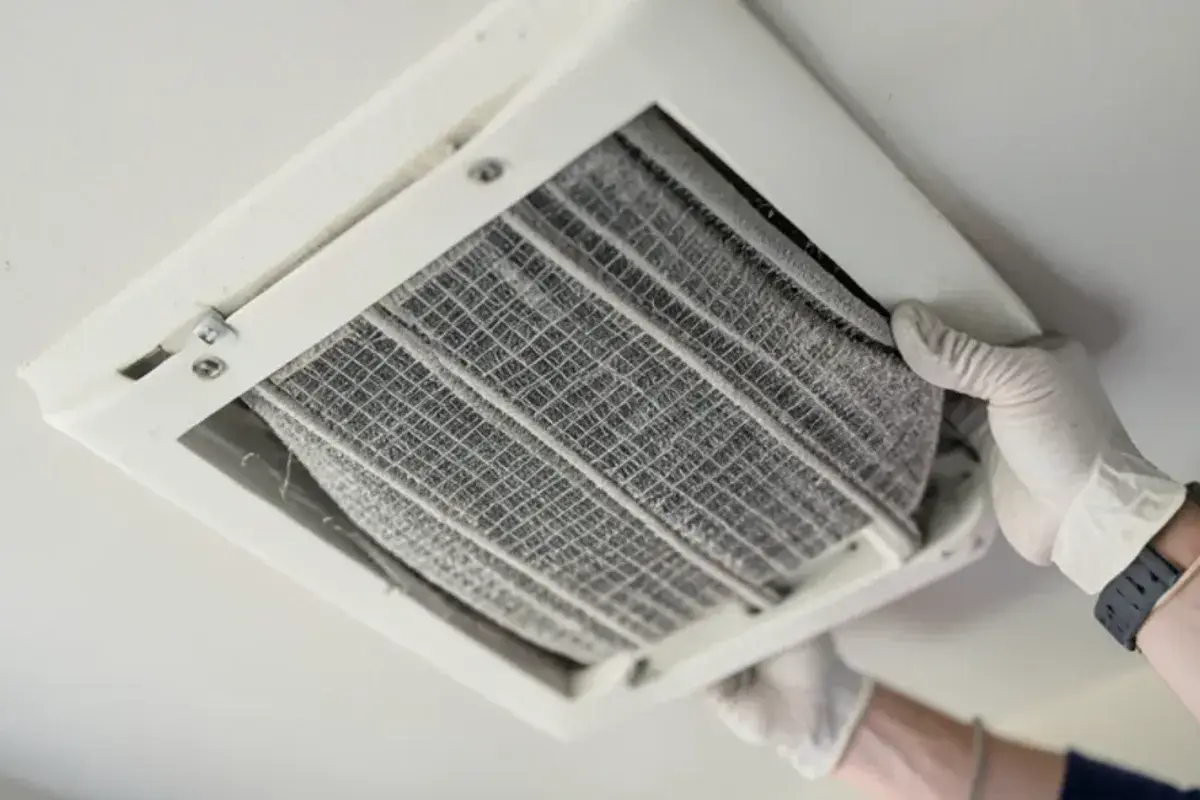
What makes a filter load up faster?
- Filter type: thin media clogs first. Going from 1-inch to a deep media filter needs a cabinet that fits it.
- Pets: fur lands on the return side first, and more animals mean more frequent checks.
- Run time: a long heat wave or a cold week means far more air through the filter.
- Leaky return ducts: gaps can pull attic or crawlspace dust into the system.
- Smoke and traffic: outdoor particles get in through windows and doors, and they load the filter too.
- Household: cooking, candles and more people in a small home all add to the load.
In compact homes and rentals like many in Bell, one small return can carry the whole system's air, so a filter there works harder than its size suggests.
Which MERV rating should you buy?
MERV is the number on the frame. EPA publishes what each rating must capture, and the table shows why the jump from 8 to 13 matters. Ratings below 11 list no figure at all for the finest size range.
| Rating | 0.3 to 1 micron | 1 to 3 microns | 3 to 10 microns |
|---|---|---|---|
| MERV 8 | No figure listed | 20% or more | 70% or more |
| MERV 11 | 20% or more | 65% or more | 85% or more |
| MERV 13 | 50% or more | 85% or more | 90% or more |
Read that with airflow in mind. EPA’s advice for an upgrade is at least MERV 13, limited by what your fan and filter slot can take. A small return or a 1-inch slot reaches that limit first, so step up one rating at a time and feel the air at the far registers. If it goes weak, step back down.
Depth is the other way up. A thick pleated filter has more surface, so the same dirt hurts airflow less.
What should you do during a smoke event?
Smoke changes the schedule immediately. EPA recommends a filter rated MERV 13 or higher during smoky periods, as high a rating as your system fan and filter slot can accommodate. Most systems can run MERV 13 without trouble if the filter is replaced often. If you are unsure, ask an HVAC technician first.
Keep a spare ready
Buy one or two extra filters before fire season. Stores can run out when smoke arrives.
Close fresh-air intakes
If your system or room unit has one, close it or set the system to recirculate.
Run the fan
EPA suggests switching the thermostat fan from Auto to On, so air keeps passing through the filter.
Check often
Inspect the filter frequently, and replace it when it looks dark brown or black.
Go back afterward
Put a fresh filter in once the event ends, because a smoke-loaded filter can hold the odor.
For a longer-term fix, whole-home filtration can add capacity without choking a thin filter slot. Our guide to smog, wildfire smoke and indoor air goes further.
What happens if you wait too long?
A clogged filter starves the system of air. In cooling mode the coil can freeze, and the AC stops cooling even though it keeps running. In heating mode the furnace runs hot until a safety switch shuts it off, which feels like a broken furnace. EPA also notes that a dirty, overloaded filter does not clean the air well.
It costs money as well. DOE says routinely replacing or cleaning air filters can lower an air conditioner’s energy use by 5 to 15 percent. ENERGY STAR warns that a dirty filter can raise energy costs and damage equipment, leading to early failure.
Can a technician measure when a filter is done?
Yes. A gauge reads the pressure drop across the filter, which is the resistance it adds to the system. Green Building Advisor reports a field rule: change it when that drop doubles from the clean reading, on a well-designed system. It also says filters can look filthy well before the gauge calls for a change. So judging by eye leans early, and that is the safe side.
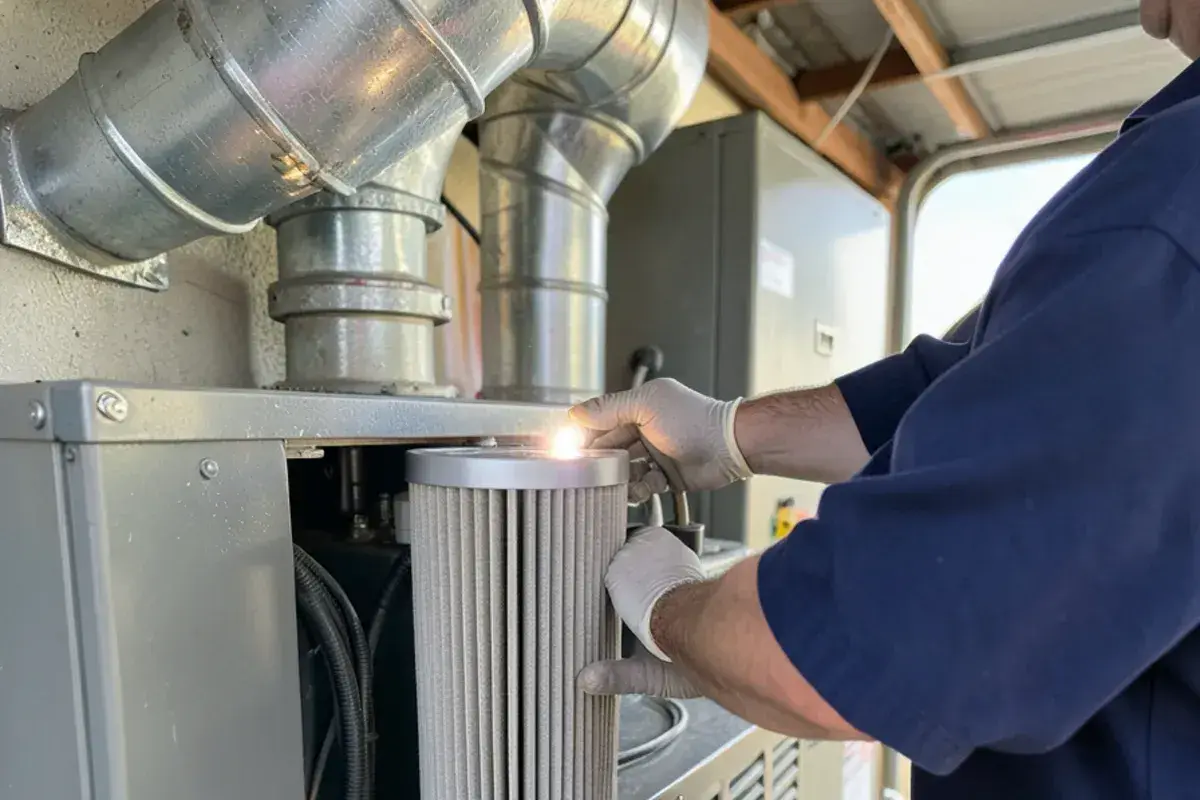
Where is the filter in an older South Gate home?
You cannot change a filter you cannot find. With a median build year of 1952 here, expect anything from a ceiling grille to a heater with no filter at all.
- Return grille: common when the unit sits in an attic or closet. Clips or screws open it.
- Furnace or air handler: a narrow slot near the blower. Cut power before opening a cabinet.
- Both places: two filters in a row add resistance, so ask a technician which to keep.
- Window AC: a mesh screen behind the front panel, usually rinsed and not replaced.
- Gravity wall heater: most have no filter. With it off and cool, vacuum the grille.
How do you change a filter correctly?
It takes a minute. Turn the system off at the thermostat, then follow this list.
- Find the slot: a wall or ceiling return grille, or a slot at the furnace or air handler.
- Read the size printed on the old filter, and match it exactly.
- Point the arrow on the frame toward the blower, in the direction of airflow.
- Make sure it fits snugly. EPA warns against bending or crushing a filter to make it fit.
- Write the date on the frame, and set a monthly phone reminder.
- Close the grille, then turn the system back on.
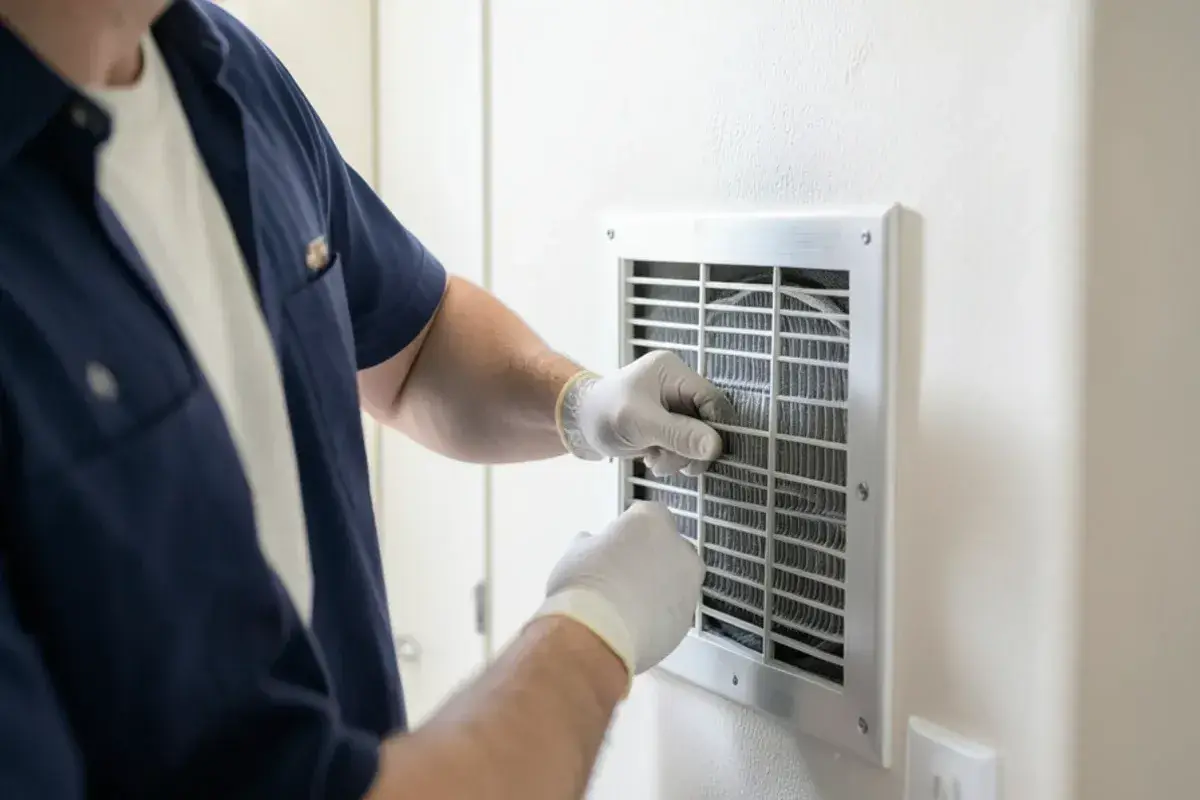
Mini split heads use washable filters, so follow the manual for cleaning. A filter check also belongs on every AC tune-up and furnace tune-up, and a technician can tell you if your system can take a better filter. Renters should check the lease, then ask the landlord who supplies filters.
Who changes the filter in a rental?
The lease decides. About 54.7% of occupied South Gate units are rented, and 73.5% in Bell, so this comes up often. If the slot sits in a locked closet or a shared attic, ask for access or a set schedule in writing. Owners with several units can fold this into a preventive maintenance checklist.
Check it monthly and let the filter tell you
Use the schedule above as a start, then adjust for pets, smoke and run time. If a new filter loads in days, airflow stays weak or the coil freezes with a clean filter in place, the filter is not the real problem. Call us. We will check the return, the ducts and the airflow, explain what we find and give you the price before any work starts.
Sources
HVAC Filter Intervals questions
Do I need to change my HVAC filter in winter in South Gate?
Yes, but it may last longer than in a hot summer. South Gate winters are mild, so a furnace often runs fewer hours than an air conditioner does in a heat spike. Keep the monthly check going anyway, because holiday cooking, a house full of guests and closed windows can all load a filter. Change it based on how it looks.
Is a higher MERV filter always better for my system?
No. Higher MERV catches more fine particles, and EPA recommends MERV 13 where the system can take it, but a dense filter in a thin slot resists airflow and loads faster. If you step up, check it more often and watch for weak airflow. A technician can measure the effect and tell you whether a deeper filter cabinet makes sense.
Can I vacuum and reuse a disposable HVAC filter?
No, replace it. A vacuum lifts the surface dust and leaves fine particles packed in the media, so airflow stays restricted while the filter looks cleaner than it is. Only filters sold as washable are built for reuse, and those must be fully dry before they go back in.
Can I run my AC without a filter until I buy a new one?
No. With no filter, dust goes straight to the blower and the indoor coil, and a dirty coil is a far bigger job than a filter change. If you run out during a South Gate heat spike, leave the old filter in place for the short trip to the store. If it is badly clogged, turn the system off until you are back.
Want help choosing the right filter?
Call Proair for a clear, upfront quote. We are open Monday to Saturday, 9 to 5.
- CSLB C-20 #776028
- 4.8 from 16 Google reviews
- Shop in USA Business Park
- Open Mon to Sat, 9 to 5
Related services
Helpful reading
Areas we serve