
Prevention checklists
Spring AC Maintenance Checklist for Homeowners
This spring AC maintenance checklist splits the work in two: quick jobs you can do with the power off, and tests that belong to a technician. Do your half in April or May, before the first warm spell. Then book the tune-up, so a weak part shows up on a mild day instead of the hottest afternoon of the year.
- CSLB C-20 #776028
- 4.8 from 16 Google reviews
- Shop in USA Business Park
- Open Mon to Sat, 9 to 5
By Proair Air Conditioning Services, CSLB C-20 License #776028. Published October 30, 2026. Updated October 30, 2026.
Why spring is the right time for AC maintenance
ENERGY STAR advises having the cooling system checked in spring and the heating system in fall. South Gate fits that pattern well. Best Places estimates about 9.6 days a year above 90°F here, so a system can sit lightly used for months and then run hard through a sudden heat spike, with cooling demand running into October.
That stop-and-start pattern is hard on tired capacitors and motors. Finding the weak part in spring costs you little time. Finding it during a heat wave can cost you a hot night.
The small jobs carry real numbers too. DOE says routinely replacing or cleaning filters can lower an air conditioner’s energy use by 5 to 15 percent. ENERGY STAR warns that a plugged drain can cause water damage in the house, and that too much or too little refrigerant makes a system less efficient.
Want your AC checked before the first hot week? Call us.
Book a spring tune-up during business hours, Monday to Saturday, and ask for a clear, upfront quote.
- CSLB C-20 #776028
- 4.8 from 16 Google reviews
- Shop in USA Business Park
- Open Mon to Sat, 9 to 5
AC maintenance checklist: what a homeowner can do
These jobs need no special tools. Turn the system off at the thermostat and at the breaker before you touch the outdoor unit. If the unit has an outdoor disconnect box, shut that off too.
Inside the house
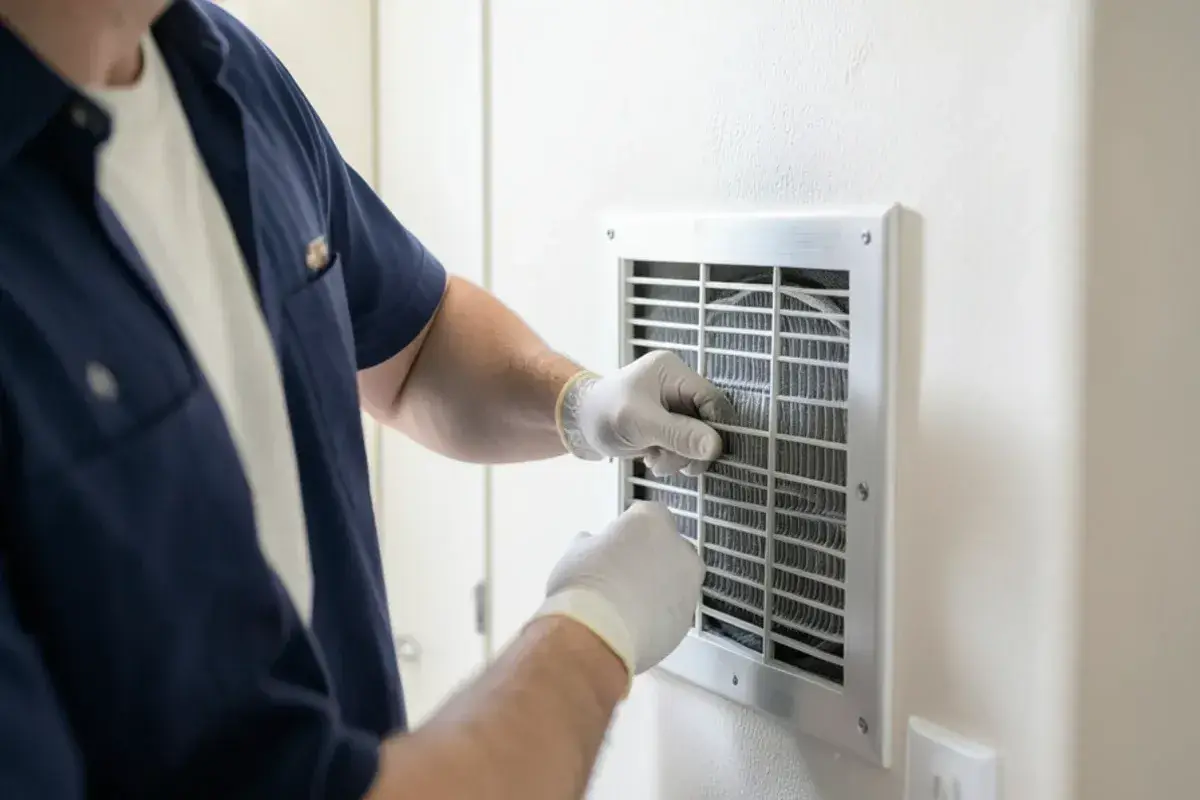
- Check the filter and replace it if it looks gray or clogged. ENERGY STAR says to check it every month.
- Open every supply register and clear furniture and rugs away from them.
- Clear boxes and storage away from the return grille.
- Replace thermostat batteries if your model uses them.
- Look at the drain pan and the area around the indoor unit for water stains or rust.
- Test your carbon monoxide and smoke alarms while you are at it.
At the outdoor unit
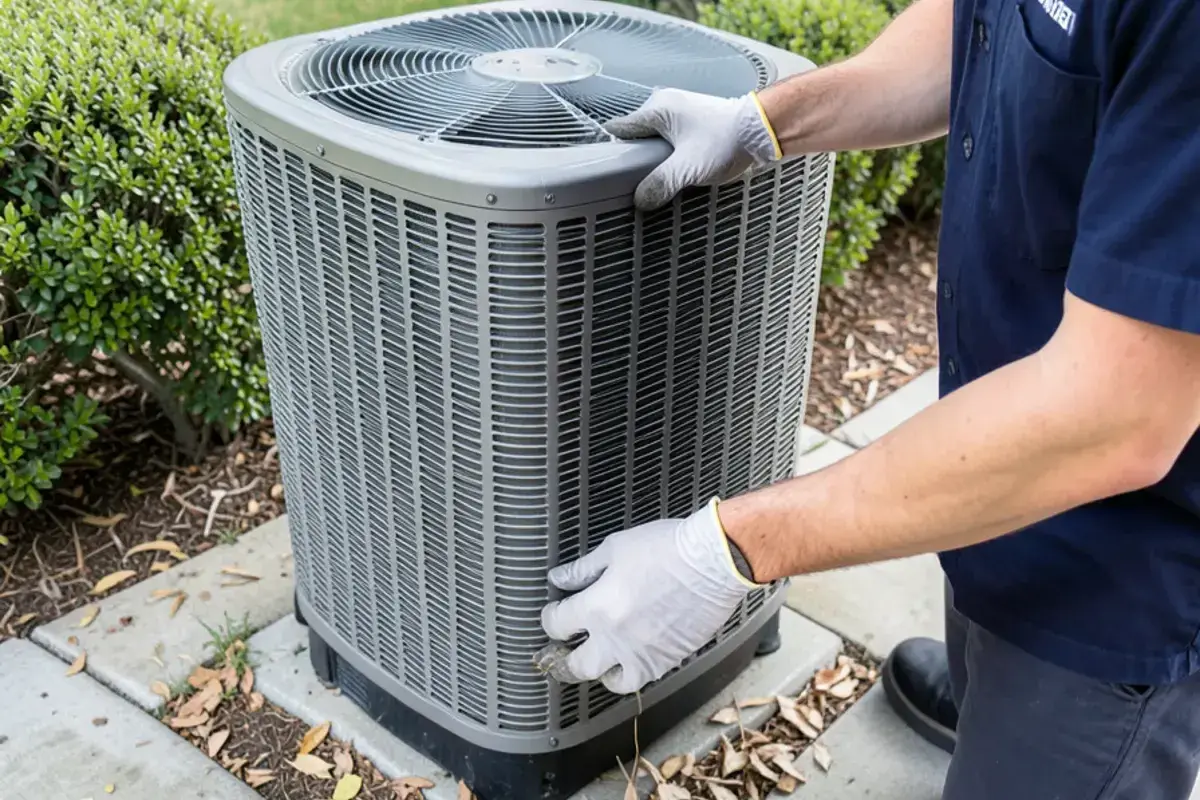
- Pick up leaves, grass clippings and trash around the base.
- Move trash bins, ladders and stored lumber out of the side yard, where they block the air the coil pulls in.
- Trim plants back. Your owner’s manual lists the clearance your unit needs.
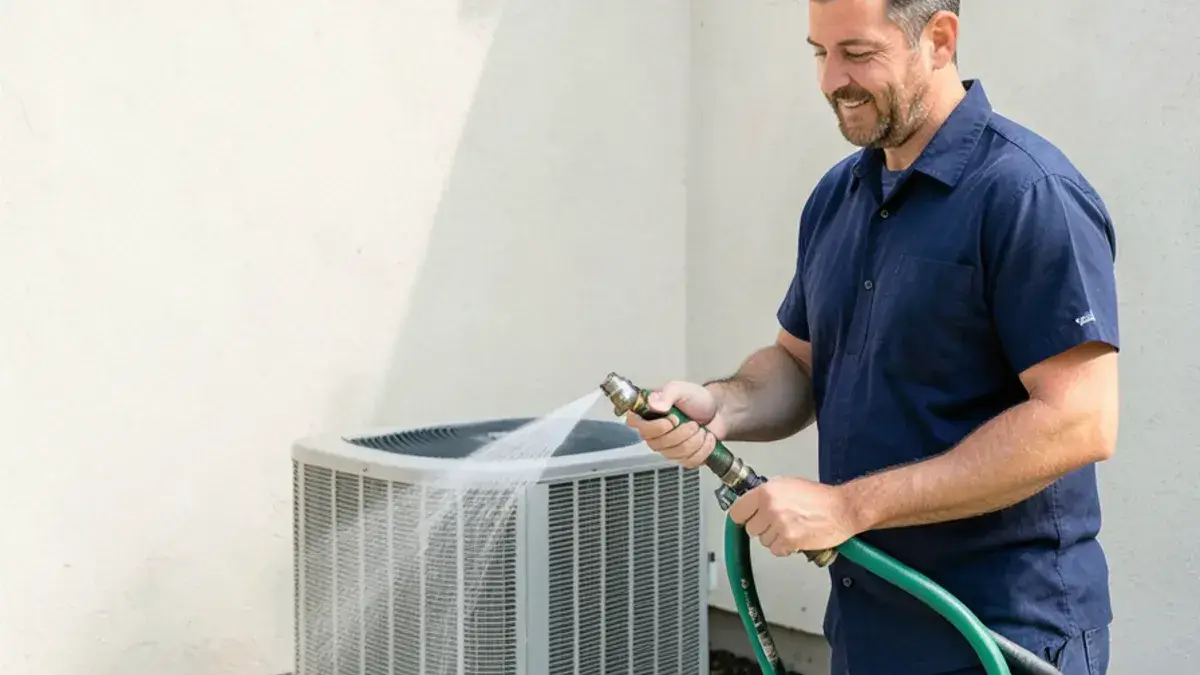
- Rinse the coil gently with a garden hose, with the power off. Never use a pressure washer, because it flattens the fins.
- Make sure the unit sits level on its pad.
- Look for insulation that is missing or torn on the larger copper line.
- Restore power, then wait a few minutes before starting cooling.
Do a first-run test
Set the thermostat to cool, a few degrees below room temperature. The outdoor fan should spin and the indoor blower should start. Let it run for several minutes and feel a register for cool air.
Listen while it runs. New rattles, buzzing or grinding deserve a call now, not after the first hot day.
What should a technician test?
Leave anything behind a panel to a trained technician. Electrical parts can hold a charge after the power is off, and EPA rules prohibit intentionally venting refrigerant during service. A good AC tune-up should cover the items below, and ENERGY STAR lists most of them in its own check-up.
- Tighten electrical connections and measure motor voltage and current.
- Test the capacitor and inspect the contactor.
- Clean the condenser coil properly, and check the evaporator coil.
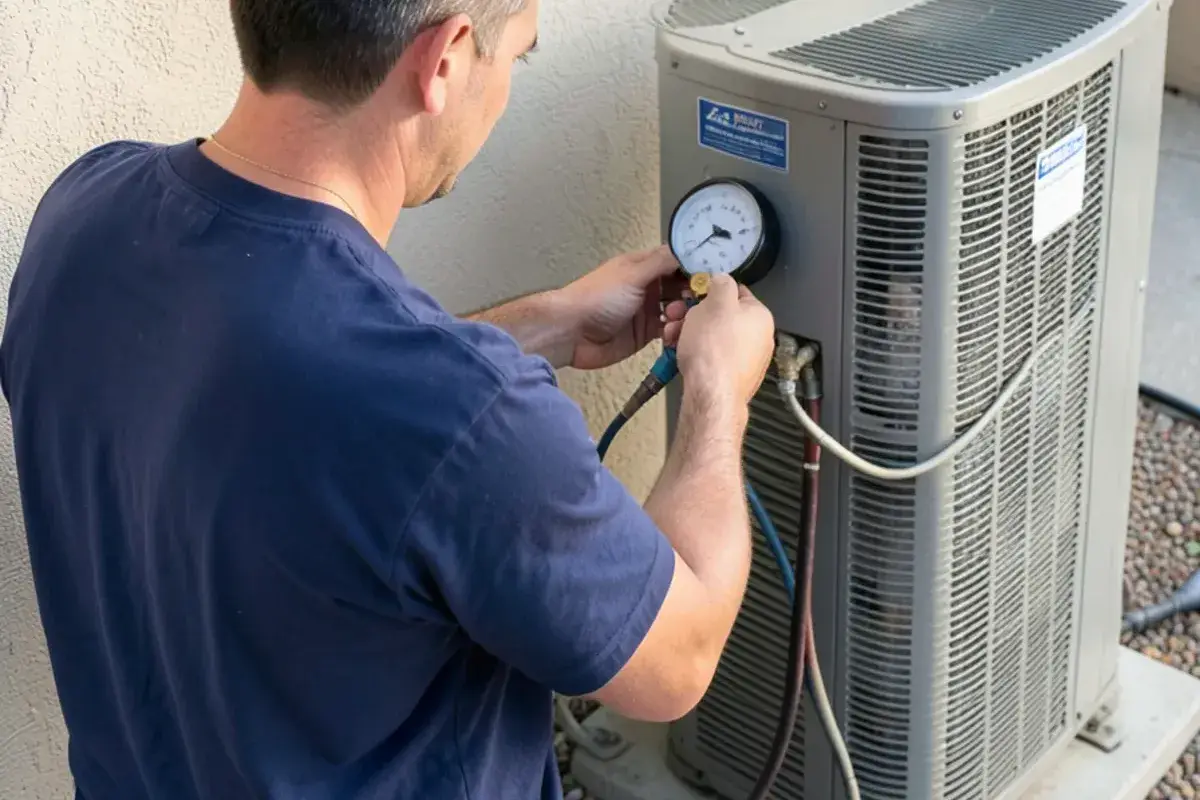
- Check refrigerant level, and look for a leak if the charge is low.
- Clean and adjust blower components, and check airflow.
- Flush and inspect the condensate drain.
- Lubricate moving parts that need it.
- Check the controls: starting, operating and shutdown.
- Confirm thermostat settings and measure temperature drop across the coil.
Ask what was measured, not only what was done. Readings give you a record to compare next year, and a slow change in them can warn you before a part fails.
Which readings should you ask for?
You do not need to interpret them. You need them written down so next spring’s numbers have something to sit beside.
| Reading | Compared against | What a drift can mean |
|---|---|---|
| Temperature drop across the coil | Last year’s number | Falling airflow, a dirty coil or a charge problem |
| Capacitor value | The rating printed on its label | A part close to failing on a hot start |
| Motor amp draw | The nameplate on the unit | A motor or compressor working too hard |
| Refrigerant pressures and line temperatures | The maker’s charge chart | A leak, or a charge set wrong |
| Airflow at the indoor unit | The system’s rated airflow | A tight filter, a dirty blower or undersized returns |
Who does what if you rent?
More than half of South Gate's occupied homes are rented, so this comes up often. Filters, clear registers and quick reports of leaks or noises usually fall to the tenant. Anything involving the equipment itself should go through the landlord or property manager. Your lease decides the details, so read it first and put repair requests in writing.
What should you watch for after the checklist?
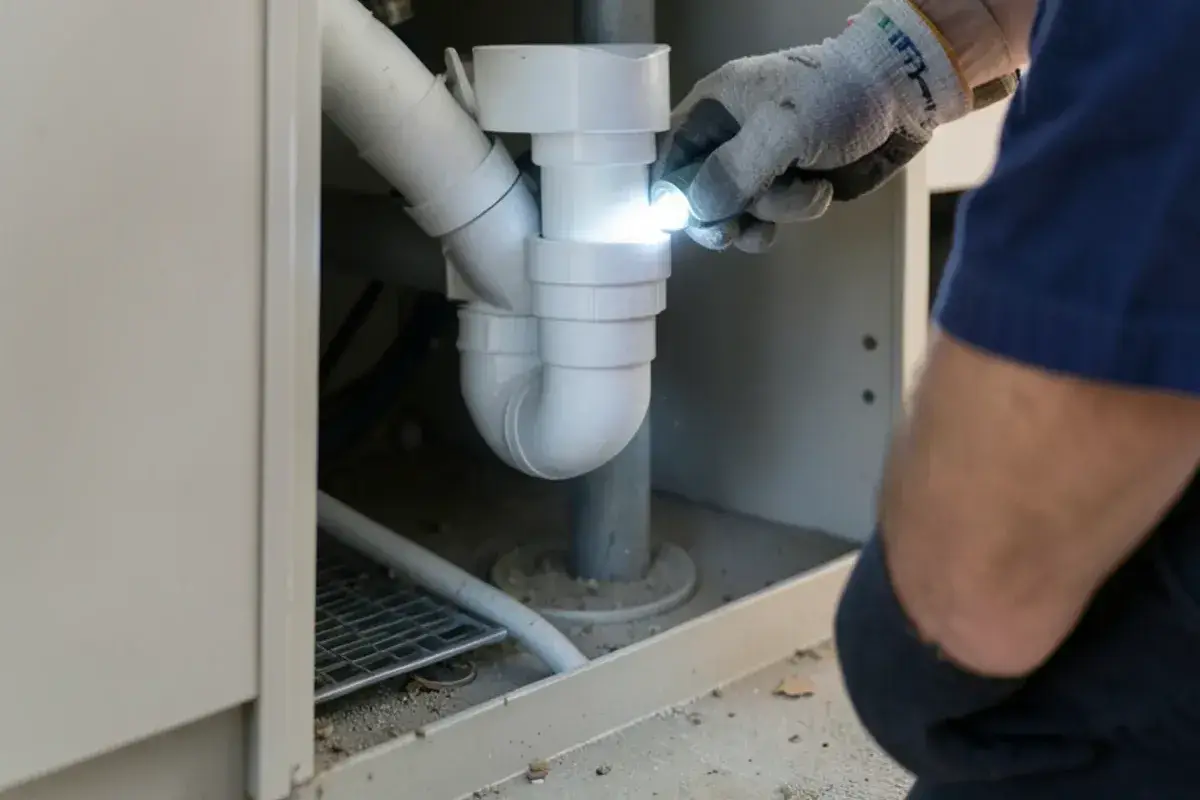
A few simple habits carry the work through summer. Check the drain area every few weeks, since a slow clog usually shows up as water near the air handler. Keep the outdoor unit clear of blowing leaves and mower clippings.
If the system runs and runs but rooms stay warm, look at airflow and ducts next. Attic ducts in older homes around South Gate and Lynwood can leak a lot of cooling before it reaches a room, and a duct repair may do more than a new outdoor unit. For filter timing, read how often to change your HVAC filter.
Lynwood shares South Gate’s 1952 median build year, and 66.6% of its homes predate 1960 (Census ACS), so its ducts have had the same decades to loosen.
What does the AC year look like in South Gate?
Spring is only the start, because the cooling season here runs long. Use this as a calendar and move a job up if your house runs early.
| When | Job | Who |
|---|---|---|
| February to April | Book the tune-up before the first heat spike | You call, a technician tests |
| April or May | Run this checklist and the first-run test | You |
| Monthly through October | Check the filter and look at the drain area | You |
| After a windy day | Clear leaves and trash from the outdoor unit | You |
| October | Give the unit a last look, then move to the furnace | You, then a technician |
When cooling season ends, heating takes over. Our fall furnace checklist picks up from there, and it runs the same way: your half first, then the tests.
Finish the list before the first hot week
Most of this checklist costs you an afternoon and a filter. It tells you whether the system starts, cools and drains while the weather still gives you room to act. Call us if the first-run test fails or you want the readings on record. We will find the fault, explain it plainly and give you a clear, upfront quote before any work starts.
Sources
Spring AC Checklist questions
How often should a South Gate home get an AC tune-up?
Once a year, in spring. ENERGY STAR recommends an annual pre-season check, and South Gate’s pattern of light use followed by sudden heat makes spring the useful window. A system with a past leak, a very dirty site or heavy pets and dust may deserve closer attention, so ask the technician what the readings suggest for your unit.
Can I clean my outdoor AC coil myself?
Yes, a gentle rinse with a garden hose is a safe homeowner job with the power off at the breaker. Spray from the outside and keep the pressure low so the fins stay straight. Do not open the top of the unit or use a pressure washer. If the coil stays matted with dirt, leave the deep cleaning to a technician during a tune-up.
What should I do if my AC will not start on the first spring test?
Check the simple things once, then stop. Confirm Cool mode, a setpoint below room temperature and live thermostat batteries, then check the breaker and the disconnect box. Reset a tripped breaker one time. If the outdoor unit hums or stays silent, leave cooling off and call. A mild South Gate spring day gives you time to fix it without a hot house.
How can I tell if my AC drain line is clogged before summer?
Look for standing water in the pan, a wet patch around the indoor unit or a ceiling stain below an attic unit. Some systems also shut off cooling when a float switch senses a full pan. In older South Gate homes with the unit in a tight attic, the stain may be the first sign. A technician can flush the drain during a tune-up.
Ready to book your spring tune-up?
Call Proair for a clear, upfront quote. We are open Monday to Saturday, 9 to 5.
- CSLB C-20 #776028
- 4.8 from 16 Google reviews
- Shop in USA Business Park
- Open Mon to Sat, 9 to 5
Related services
Areas we serve