
Local angles
Heat Waves in Southeast LA: Keeping Your AC Running
Keeping your AC running through a heat wave in Los Angeles County comes down to clean airflow, a clear outdoor unit and a steady thermostat. Handle the first two before the heat arrives. Then leave the thermostat alone and watch for the warning signs below.
- CSLB C-20 #776028
- 4.8 from 16 Google reviews
- Shop in USA Business Park
- Open Mon to Sat, 9 to 5
By Proair Air Conditioning Services, CSLB C-20 License #776028. Published October 30, 2026. Updated October 30, 2026.
Why do heat waves hit Southeast LA air conditioners so hard?
The answer is the gap between mild weeks and hard days. Best Places estimates about 9.6 days above 90°F a year in South Gate, with summer highs in the mid-90s and occasional triple digits. A system can coast for weeks, then run nonstop for three days. Whatever is weak gives out first: a tired capacitor, a dirty coil, a slow fan motor.
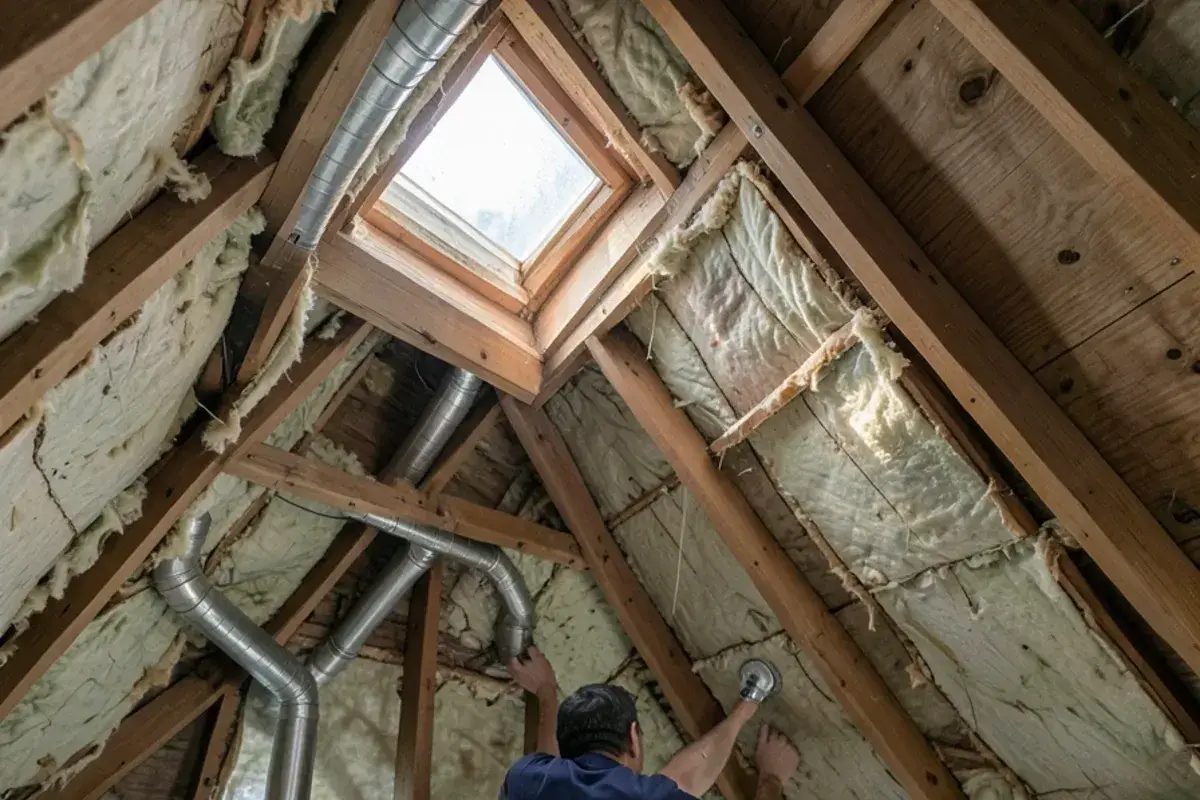
The houses add to the load. South Gate’s median build year is 1952, and many houses from that era keep their ducts in hot attics. If you live in Bellflower or another neighboring city, check your own build year. The attic problem follows the age of the house, not the city line.
Warm nights make it harder, and the season runs late. The National Weather Service posted an Extreme Heat Warning for parts of the county from October 2 through October 8, 2026, and its notices for the Inland Coast zone named Downey and Compton. County Public Health warned of unusually warm nights, and a system that normally rests after dark keeps running on nights like those.
AC struggling in the heat? Call Proair.
Reach our South Gate shop Monday to Saturday, 9 to 5, for a clear, upfront quote before the next hot stretch.
- CSLB C-20 #776028
- 4.8 from 16 Google reviews
- Shop in USA Business Park
- Open Mon to Sat, 9 to 5
What should you do before the forecast turns hot?
Do this list during a mild week. A failure on a cool day is an inconvenience. The same failure at 98°F is a long afternoon.
- Replace the filter. DOE says a clean filter can cut AC energy use by 5 to 15 percent.
- Clear leaves, weeds and stored items from around the outdoor unit.
- Open every supply register and move furniture off the returns.
- Swap the thermostat batteries if yours uses them.
- Run cooling for 20 minutes on a warm day and feel the vents.
- Schedule your AC tune-up for spring, ahead of cooling season.
Give the outdoor unit open air
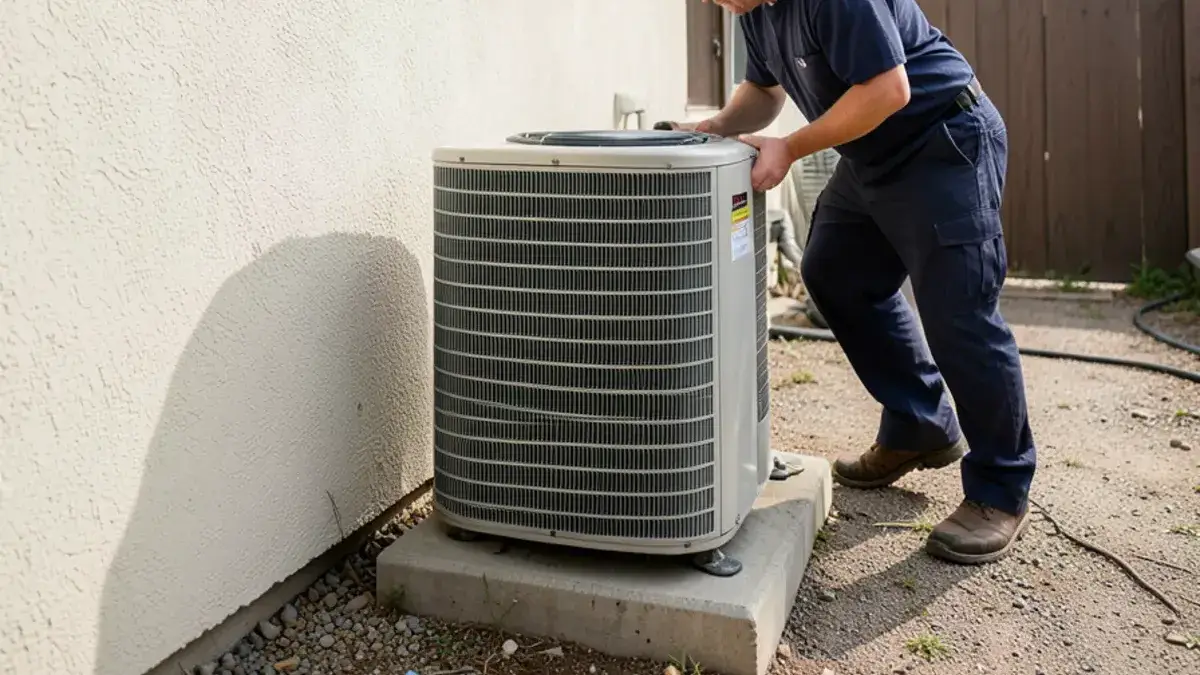
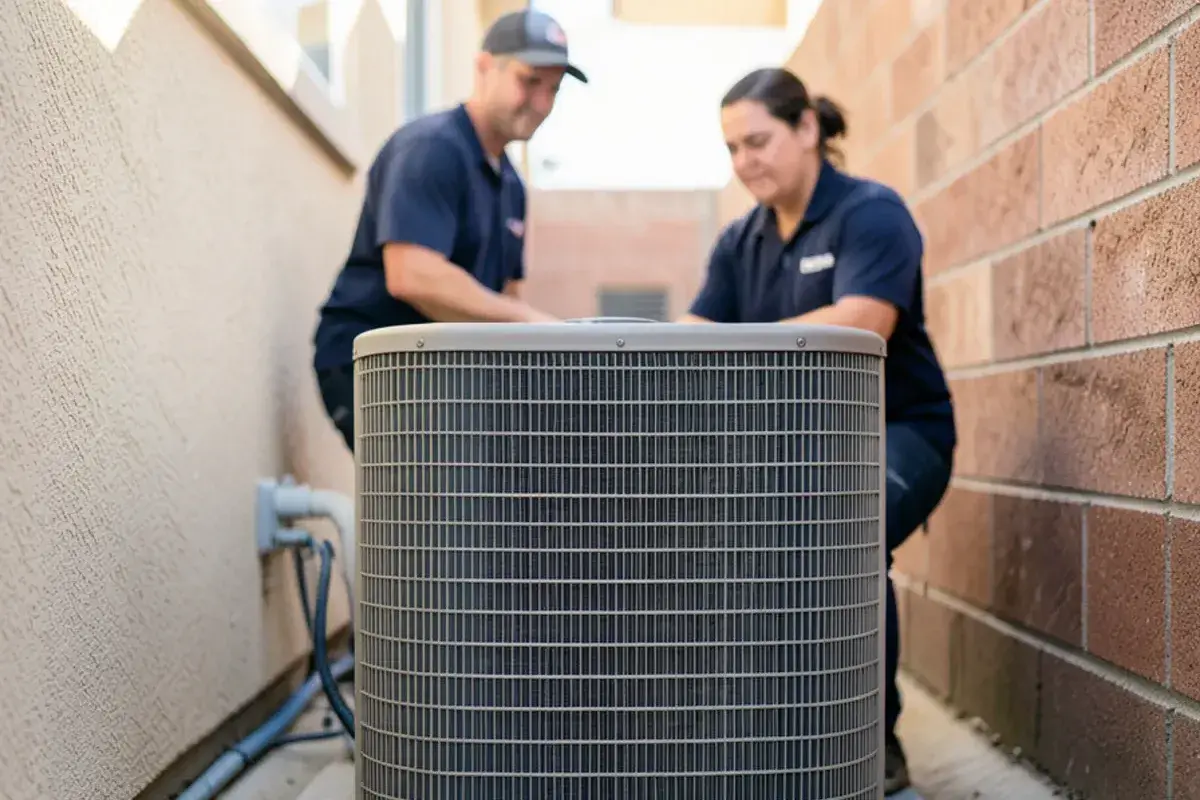
The outdoor unit is where your home’s heat leaves. DOE tells split-system owners to clean debris and leaves from the fan, compressor and condenser. On a small lot, the usual trouble is a side yard filled with bins or stored lumber. A unit boxed in by a block wall can pull its own hot exhaust back through the coil, so check the clearances in the installation manual.
How should you run your AC in a Los Angeles heat wave?
Set the thermostat and leave it. Dropping it to 65°F does not cool the house faster. The system delivers the same cold air at the same rate, and it just runs longer. Use the settings below, which come from Los Angeles County, the state Flex Alert program and SCE.
| Situation | Setting | Why |
|---|---|---|
| Ordinary hot day | 75 to 80°F | The range Ready LA County advises |
| Morning of a Flex Alert | Pre-cool to 72°F | Banks cooling before peak demand |
| During a Flex Alert, usually 4 to 9 p.m. | 78°F or higher, if your health allows | Cuts grid load when supply is tight |
| Nobody home | 85°F or off | SCE’s conservation advice for an empty house |
A Flex Alert is a voluntary request from the California ISO, the grid operator, to cut electricity use. The goal is to head off rotating outages. Your health comes first, so skip the 78°F setting if anyone at home is at risk from heat.
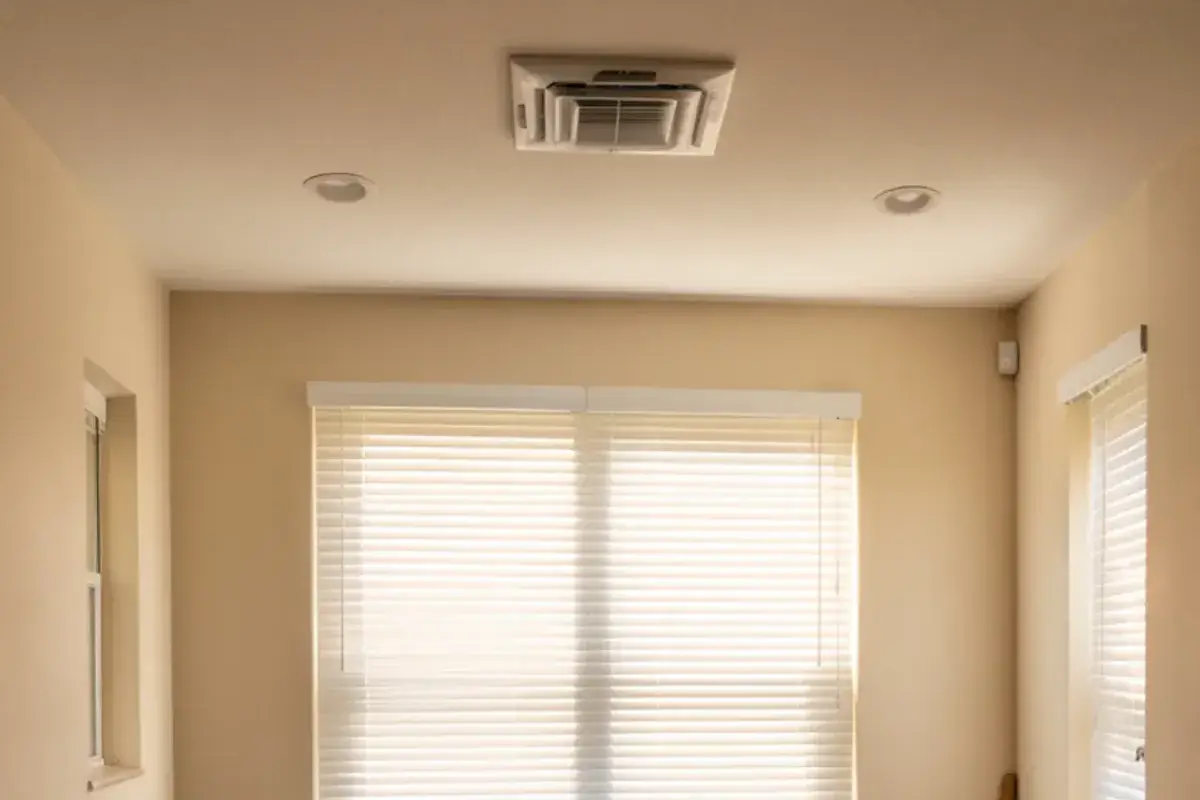
Help the system from the inside too. Close blinds and drapes before the sun reaches the glass. Use the stove or microwave instead of the oven, and save the dryer for early morning. Each of these keeps heat out of the house, so the AC has less to remove.
How to pace a heat-wave day
This order fits a Flex Alert day and SCE’s TOU-D 4-9 PM plan, where rates peak from 4 to 9 p.m. Your bill names your plan.
Morning
Run the washer and dishwasher now, as Flex Alert advises, and shut the east-side blinds before the sun arrives.
Before 4 p.m.
Bring the house down a few degrees, as SCE suggests. A house with leaky attic ducts gives that coolness back quickly, so the extra run time pays off most in a tight house.
4 to 9 p.m.
Hold your setting and leave the dryer, oven and dishwasher off until the peak has passed.
After dark
Note the indoor temperature at 10 p.m. If it never falls, book a check.
Why can a healthy AC fall behind on the worst days?
An AC moves indoor heat into the outdoor air, and that job gets harder as the air gets hotter. Manual J, the load calculation, also uses a design temperature for the area, not the hottest day on record. PNNL’s Building America guidance says typical systems may lack full capacity during extreme heat.
So a system that drifts a few degrees above the setting at 4 p.m. may be sized correctly. The same guidance warns against oversizing for heat waves, because an oversized system short cycles and controls humidity poorly. Fix the airflow and any leaking attic ducts first.
What about window units and rooms with no central air?
Pick the room you sleep in, keep the door shut and clean the unit’s filter before the heat arrives. Ready LA County advises insulating around window units, and DOE warns that a poor install can raise air leakage by as much as 10 percent. DOE suggests taped rigid foam panels instead of the accordion panels.
What are the warning signs your AC is about to quit?
Long run times are normal in real heat. These signs are not, and each one means shut the system off at the thermostat before more damage happens.
- Warm air at the vents while the outdoor unit runs.
- Ice on the copper line or the indoor coil.
- A hum with no fan spin at the outdoor unit.
- Short cycling, which means the system turns on and off every few minutes.
- A breaker that trips again after one reset. Do not keep resetting it.
- A burning smell at the vents or the outdoor unit.
Any of these calls for AC repair, and the sooner the better. A failed capacitor or a low charge makes the compressor run hot, and the compressor is the priciest part in the unit.
What if the power drops or the AC stops?
If the power goes out, turn the AC off at the thermostat. The CPUC says customers in a rotating outage are typically without power for about an hour. When power returns, wait a few minutes before you switch cooling back on, so the compressor does not start against high pressure.
If the system fails, look at the filter and the breaker first, then pick up the phone. We work Monday to Saturday, 9 to 5, and we are closed Sunday. For a plan to get through the wait, read what to do when your AC stops working in a heat wave and see our emergency AC repair page.
Do the work in the mild weeks
A heat wave rarely damages a healthy system. It exposes what was already tired. Change the filter and open up the outdoor unit while the weather is easy, then let the system run steady when the forecast turns. If the house stops recovering after dark, call us before the next hot stretch. We will test the system, explain what we find in plain words and give you the price before any work starts.
Sources
- Ready LA County: Extreme Heat
- Flex Alert: What Is a Flex Alert?
- California Public Utilities Commission: About Rotating Outages
- U.S. Department of Energy: Energy Saver 101, Home Cooling
- LA County: Extreme Heat Warning notice, October 1, 2026
- SCE: How to conserve energy usage
- SCE: Time-of-use residential rate plans
- PNNL Building America Solution Center: Design for extreme heat
Heat Waves and Your AC questions
Is it bad to run my AC all day during a Los Angeles heat wave?
No, a healthy system can run most of a hot day. Air conditioners are built for long cycles, and long run times are expected when it is 95°F outside. Trouble looks different: warm air at the vents, ice on the copper line, or a house that never cools after sunset. Turn the system off if you see those, and call for a diagnosis.
Should I spray water on my outdoor AC unit during a heat wave?
Spraying a running unit does not fix anything. If the coil is dirty, shut off power at the disconnect and rinse it gently with a garden hose, from the inside out where you can reach. Skip the pressure washer, because it bends the fins. A coil packed with dirt or grease needs a proper cleaning as part of a tune-up.
Why is my South Gate house still warm at night after the AC ran all day?
Attics and walls hold heat long after sunset, so an older South Gate home can lag for hours. The AC has to remove that stored heat as well. Give it until mid-evening. If the indoor temperature still is not falling, suspect a dirty coil, a low charge or leaking attic ducts, and ask a technician to measure the temperature drop.
Should I shut the AC off when I leave home during an LA County heat wave?
Raise it instead on a multi-day heat wave. SCE’s advice is 78°F at home and 85°F or off when you are away. We lean toward 85°F in an older attic-duct house, because a house left to soak all day can take hours to recover. Keep it on if pets or anyone at risk stays behind.
Will a bigger AC stop my South Gate house from falling behind in a heat wave?
Usually not. Manual J sizes a system for local design conditions, and PNNL’s Building America guidance warns that oversizing for heat waves brings short cycling and poor humidity control. In a South Gate house from the 1950s, attic ducts are often the bigger loss. Ask for a load calculation and a duct check before anyone quotes a larger unit.
Get your AC ready for the next hot spell
Call Proair for a clear, upfront quote on a tune-up or repair. We are on Paramount Boulevard in South Gate, Monday to Saturday, 9 to 5.
- CSLB C-20 #776028
- 4.8 from 16 Google reviews
- Shop in USA Business Park
- Open Mon to Sat, 9 to 5
Related services
Helpful reading
Areas we serve