
Emergency guides
What to Do When Your AC Stops Working in a Heat Wave
If your AC stopped working, what to do first is move the people in the house somewhere cool, then switch the system off at the thermostat. The checks below take minutes and need no tools. If they do not bring the cooling back, leave the system off and call a technician.
- CSLB C-20 #776028
- 4.8 from 16 Google reviews
- Shop in USA Business Park
- Open Mon to Sat, 9 to 5
By Proair Air Conditioning Services, CSLB C-20 License #776028. Published October 30, 2026. Updated October 30, 2026.
AC stopped working? What to do in the first 10 minutes
Work through these in order. Stop at any step that shows a fault you should not touch.
Check on people first
Anyone older, very young, pregnant or ill moves to the coolest room now, or out of the house to a cooled building.
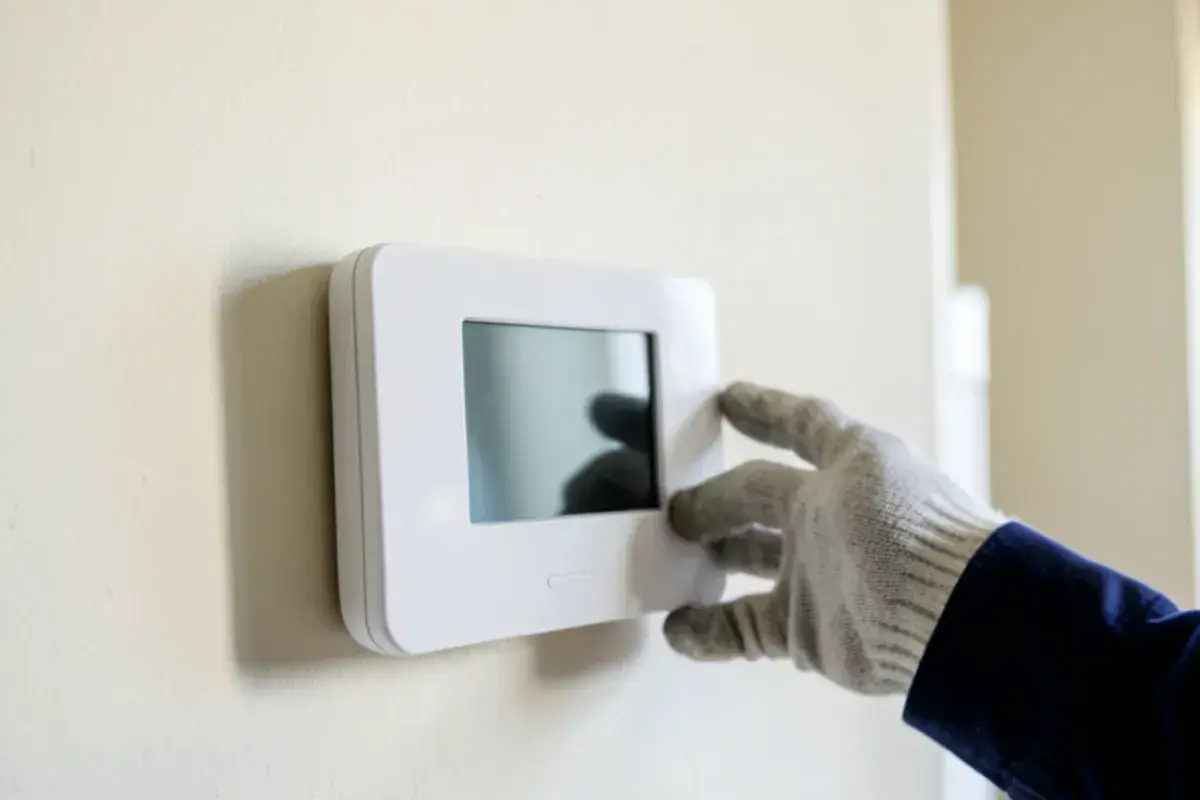
Switch cooling off at the thermostat
Repeated restarts can overheat a compressor that is already struggling. Off is the safe setting while you check.
Rule out a power outage
If lights are out too, check the SCE outage map. New outages can take up to 30 minutes to appear, so also ask a neighbor.
Check the breaker once
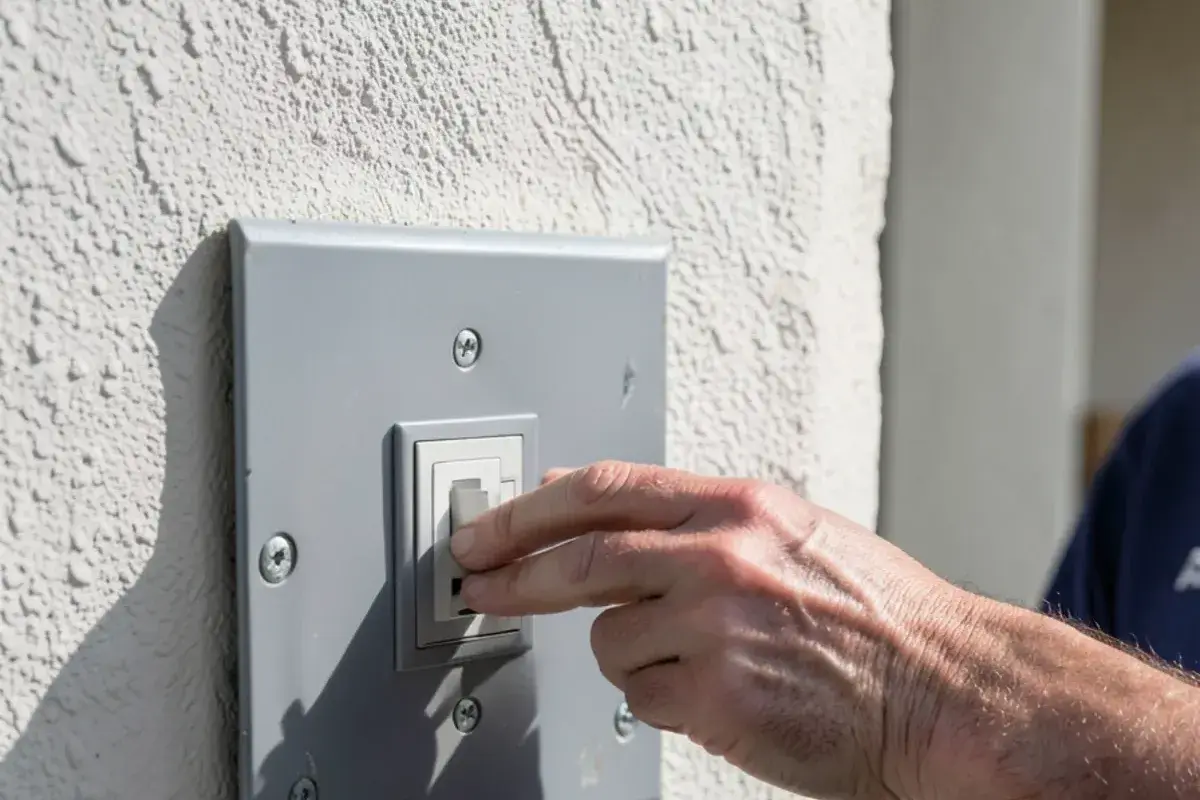
Find the AC breaker. If it tripped, reset it one time. If it trips again, leave it off and call.
Pull the filter
A filter packed with dust starves the coil of air and can freeze it. Replace it if you have a spare.
Look for ice or water
Ice on the copper line or water near the indoor unit means leave cooling off. Run the fan alone to thaw a frozen coil.
AC still down after these checks? Call us.
Tell us what the system did before it quit. We answer Monday to Saturday, 9 to 5.
- CSLB C-20 #776028
- 4.8 from 16 Google reviews
- Shop in USA Business Park
- Open Mon to Sat, 9 to 5
Is it broken, or just losing to the heat?
A system that runs nonstop on a brutal afternoon may be working at its limit, not failing. Hold your hand at a supply register. Cool air and a steady run usually mean the AC is healthy but behind, and it should catch up after sunset.
Best Places estimates only about 9.6 days a year above 90°F for South Gate, so most of the year a system never gets tested this hard. Attic ducts in older homes add to the load, because the air picks up heat on the way to the room.
| What you notice | What it usually means | Your move |
|---|---|---|
| Cool air, runs nonstop, house stays warm | System at its limit | Close blinds, change the filter, wait for evening |
| Warm air, outdoor unit running | Low refrigerant, dirty coil or failed part | Turn it off and call |
| Outdoor unit hums or clicks, fan still | Failed capacitor or contactor | Turn it off and call |
| Starts and stops every few minutes | Short cycling, meaning rapid on-off runs from a fault or an oversized unit | Note the timing, turn it off and call |
| Nothing happens at all | Power, breaker, thermostat or a drain safety switch | Recheck the breaker and thermostat batteries, then call |
Why a system can go completely dead
Long runs pull more water out of the air, and that water has to leave through the condensate drain. When the drain clogs, a float switch on many systems cuts cooling before the pan overflows. The thermostat may look normal while nothing runs. If you can reach the indoor unit safely, look for standing water in the pan. Leave the system off if you find it, and tell us what you saw.
How do you keep the house safe while the AC is down?
Treat the heat as the emergency, not the equipment. EPA says electric fans will not prevent heat-related illness once a room reaches the mid-90s, so plan a place to go before the house gets there.
- Block the sun: close blinds and drapes on the sunny side before the room heats up.
- Cool the body: take cool showers and drink water through the day.
- Find a cooled room: use the Ready LA County map at ready.lacounty.gov/heat or call 211 for the nearest cooling center. Hours change during heat events, so confirm before you go.
- Check on neighbors: older adults living alone are at higher risk in a hot house.
Heat exhaustion comes first, so watch for it
CDC describes heavy sweating, cold and clammy skin, a fast weak pulse, nausea and fainting. Move the person somewhere cool, loosen their clothing, apply cool wet cloths and have them sip water. Get medical help if they vomit, get worse or still feel ill after an hour.
If someone at home depends on power or cooling
Some prescriptions change how the body handles heat, CDC warns, so ask the doctor or pharmacist before the next hot spell, especially about water pills or a fluid limit. If someone relies on life support equipment or has a serious condition, ask SCE about its Medical Baseline program. SCE’s fact sheet also lists temperature sensitivity that requires air conditioning. The program adds an energy allowance and outage notices, and it does not supply backup power.
How should you run the house until the repair?
Work with the outside air. EPA’s advice for a house without cooling is to shade sun-facing windows and close windows whenever the air outside is hotter than the air inside. That gives you a simple daily rhythm.
| Time of day | What to do | Why |
|---|---|---|
| Early morning | Open windows if it is safe, with a fan drawing cooler air in | This is usually the coolest air of the day |
| Late morning | Close windows and shades once outdoor air warms up | Keeps hot air and direct sun out |
| Afternoon peak | Leave for a cooling center, or a mall or movie theater | Ready LA County lists these as places to cool off |
| Evening | Reopen windows once outdoor air drops below indoor air | Lets the house shed the heat it stored |
Fans have a limit. They move air and cool you only by drying sweat. CDC’s heat guidance says to use them only while indoor temperatures are below 90°F, because above that a fan can raise body temperature. Your thermostat screen usually still shows the room temperature, so check it through the afternoon. EPA also says not to run a fan in a closed room, so leave a door or window open.
What not to do to a dead air conditioner
These are the moves that turn a modest repair into a large one, or put you at risk.
- Do not keep resetting a breaker. A second trip means a real electrical fault.
- Do not open the outdoor unit’s electrical panel. Capacitors hold a charge after the power is off.
- Do not spray water into a running condenser.
- Do not agree to add refrigerant without a leak search. Refrigerant does not get used up, so a low charge means a leak.
Who to call, and what to have ready
Our posted hours are Monday to Saturday, 9 to 5, and we are closed Sunday. If the AC quits on a Saturday night, plan on a cooling center and a call Monday morning. Our emergency AC repair page explains what counts as urgent during those hours.
- What the system did right before it stopped
- Whether the breaker tripped, and how many times
- A photo of the outdoor unit’s nameplate
- Anyone in the home at higher risk from heat
The same steps apply in Downey, South Gate and the surrounding cities, because most of the area shares SCE power. For the repair itself, see how we approach AC repair, and book an AC tune-up in spring so the first heat spike finds fewer weak parts.
People first, then the machine
A stopped AC on a hot day comes down to two jobs, in this order. Get anyone at risk somewhere cool, then switch the system off so a small fault stays small. A system left off is usually cheaper to fix than one run until the compressor fails. If the checks do not bring cooling back, call us with your notes. We will explain what failed and give you the price before any work starts.
Sources
- CDC: Symptoms of heat-related illnesses
- EPA: Extreme heat and indoor air quality
- Ready.gov: Extreme heat
- Ready LA County: Heat and cooling center map
- 211 LA County
- Southern California Edison: Check outage status
- Flex Alert: California energy conservation alerts
- CDC: About heat and your health
- CDC: Heat and older adults
- CPUC: Medical Baseline
- SCE: Medical Baseline Allowance fact sheet
AC Stopped in a Heat Wave questions
Should I run my AC during a Flex Alert in Southeast LA?
Yes, if you need it. A Flex Alert is a voluntary request to cut electricity use, usually between 4 and 9 p.m. The published advice is to set the thermostat to 78 or higher if your health permits, and to cool the house earlier in the day. Health comes first, so anyone at risk from heat should stay cool.
Does my landlord have to fix the AC in a Downey rental?
It depends on your lease and current law, so get advice before you assume either way. California Civil Code 1941.1 lists heating among habitability items and does not list cooling. Report the failure to your landlord in writing right away. A tenant attorney or LA County’s tenant resources can tell you what applies to your unit.
Can I leave my AC running if it cannot keep up in a heat wave?
Yes, if cool air is coming from the registers and the system runs smoothly. Long runs are normal on the hottest afternoons. Change the filter and close the blinds to help it. Turn it off if the air goes warm, you see ice on the copper line or you hear a new noise, because those point to a fault.
Cooling out and the checks did not help?
Call Proair for a clear, upfront quote. Our hours are Monday to Saturday, 9 to 5.
- CSLB C-20 #776028
- 4.8 from 16 Google reviews
- Shop in USA Business Park
- Open Mon to Sat, 9 to 5
Related services
Helpful reading
Areas we serve