
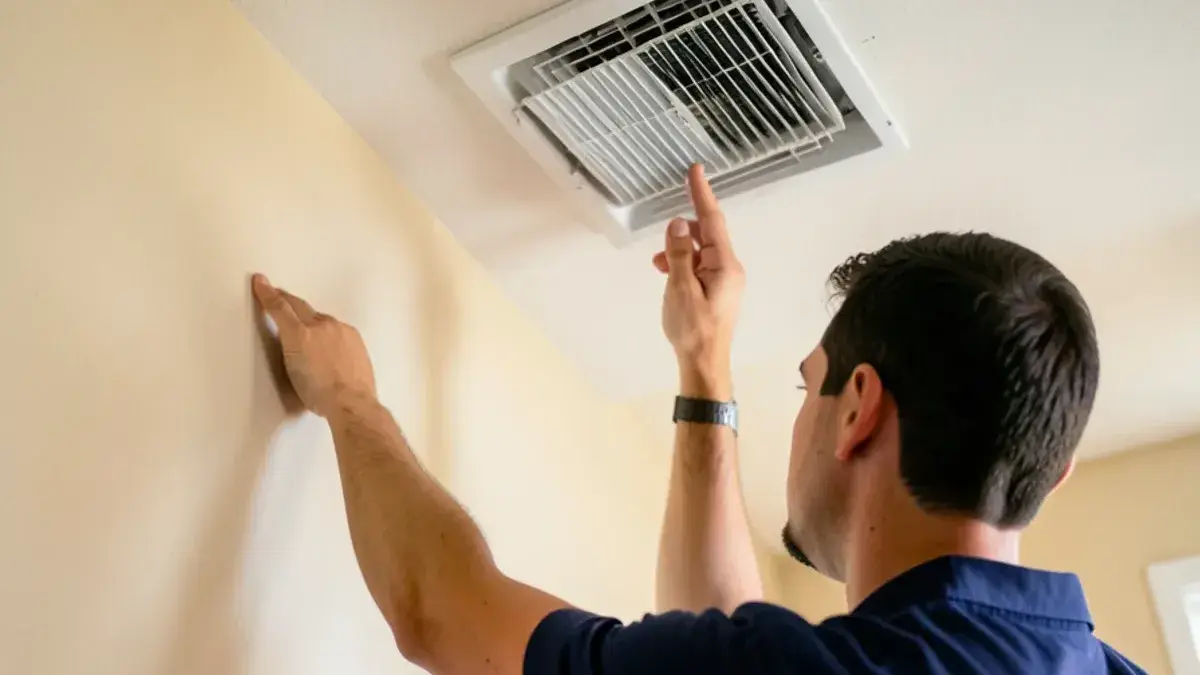
Problem solving
Why Is My AC Blowing Warm Air? 7 Common Causes
An AC blowing warm air usually has one of seven faults: a thermostat setting, a clogged filter, lost power at the outdoor unit, a failed capacitor, a dirty outdoor coil, a refrigerant leak or leaking ducts. Turn cooling off first. Then check the first three yourself, because those are the ones you can fix without tools.
- CSLB C-20 #776028
- 4.8 from 16 Google reviews
- Shop in USA Business Park
- Open Mon to Sat, 9 to 5
By Proair Air Conditioning Services, CSLB C-20 License #776028. Published October 30, 2026. Updated October 30, 2026.
What should you do first?
Switch the system off at the thermostat. Running a failing AC can overheat the compressor, the costliest part in the unit. If you see ice on the copper line, leave cooling off and run the fan alone to thaw it. Then work down the list below.
Warm air from your vents? Call Proair.
We test before we replace parts, explain the fault plainly and give you the price before any work starts.
- CSLB C-20 #776028
- 4.8 from 16 Google reviews
- Shop in USA Business Park
- Open Mon to Sat, 9 to 5
The 7 causes of an AC blowing warm air
These run from the easiest check to the hardest. Causes 1 to 3 are yours to try. Causes 4 to 7 need a technician with meters and gauges.
The thermostat is set wrong
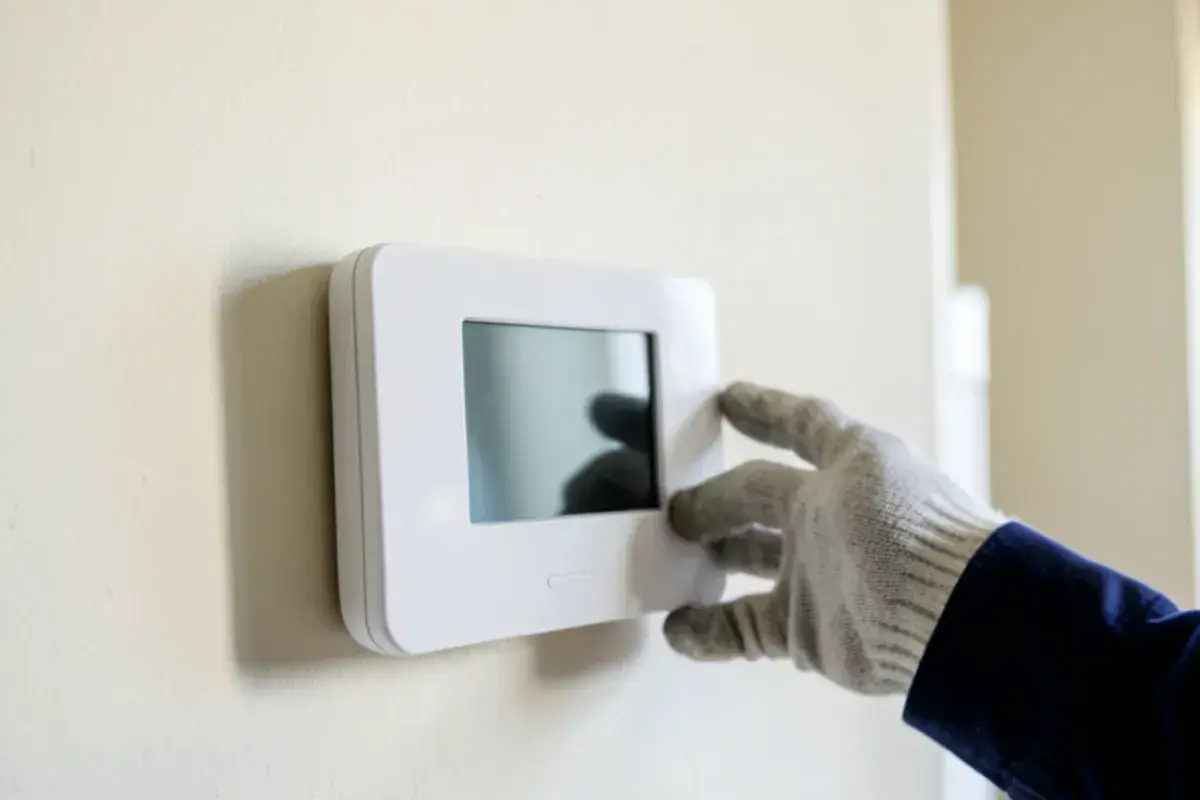
Look for Cool mode, a setting below room temperature and the fan on Auto. With the fan on On, the blower keeps moving air after the compressor stops, and that air feels warm. Replace weak batteries. DOE lists a wrong setting or a bad temperature reading among common cooling complaints.
The filter is clogged and the coil froze
A packed filter starves the indoor coil of air. The coil drops below freezing, ice builds, and the airflow fades to a weak, warm trickle. Replace the filter, keep cooling off and run the fan for a few hours until the ice is gone. Restart only after the coil is clear.
The outdoor unit has no power
If the blower runs indoors but the outdoor fan does not, check the breaker and the disconnect box by the unit. Reset a tripped breaker once. If it trips again, leave it off. A second trip points to a short or a failing motor, and repeat resets can do damage.
A capacitor or contactor failed
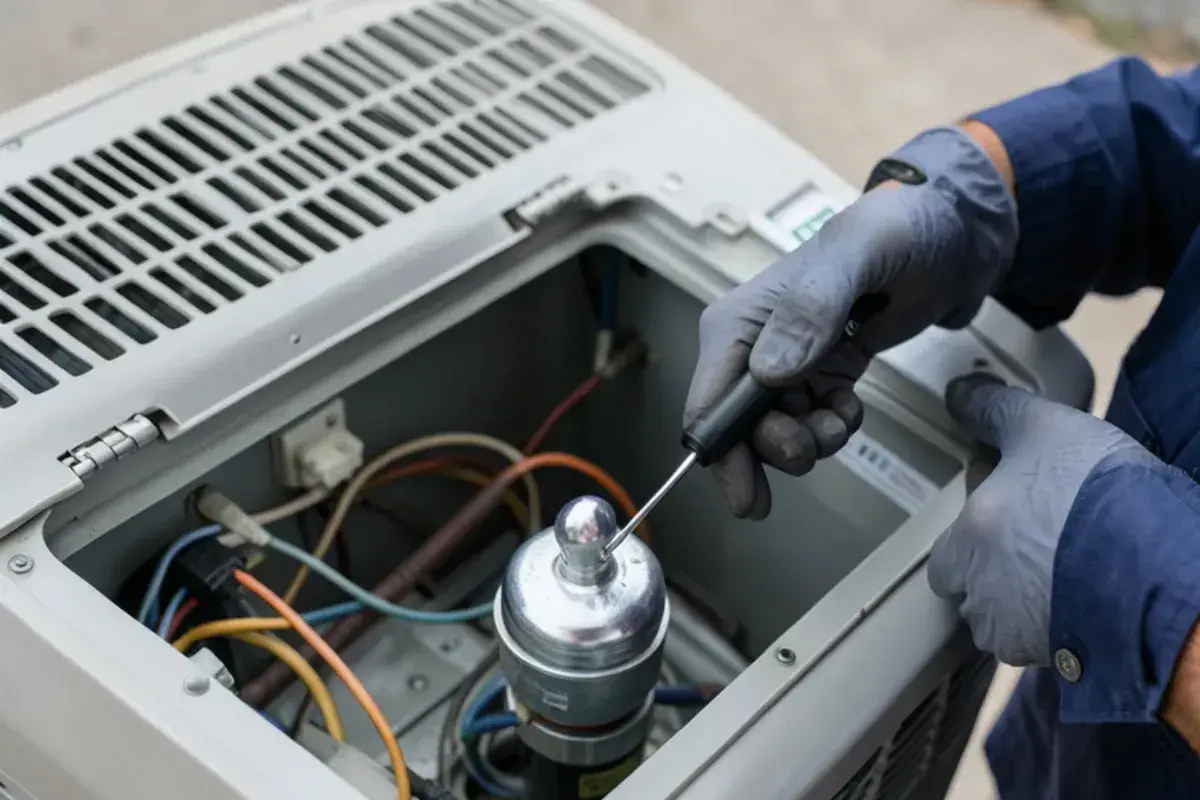
The capacitor gives the motors their starting kick. The contactor is the switch that sends them power. When either fails, the outdoor unit hums or sits silent while warm air blows inside. These parts store a charge and carry line voltage, so this is a job for a technician. It is often a modest AC repair.
The outdoor coil is dirty
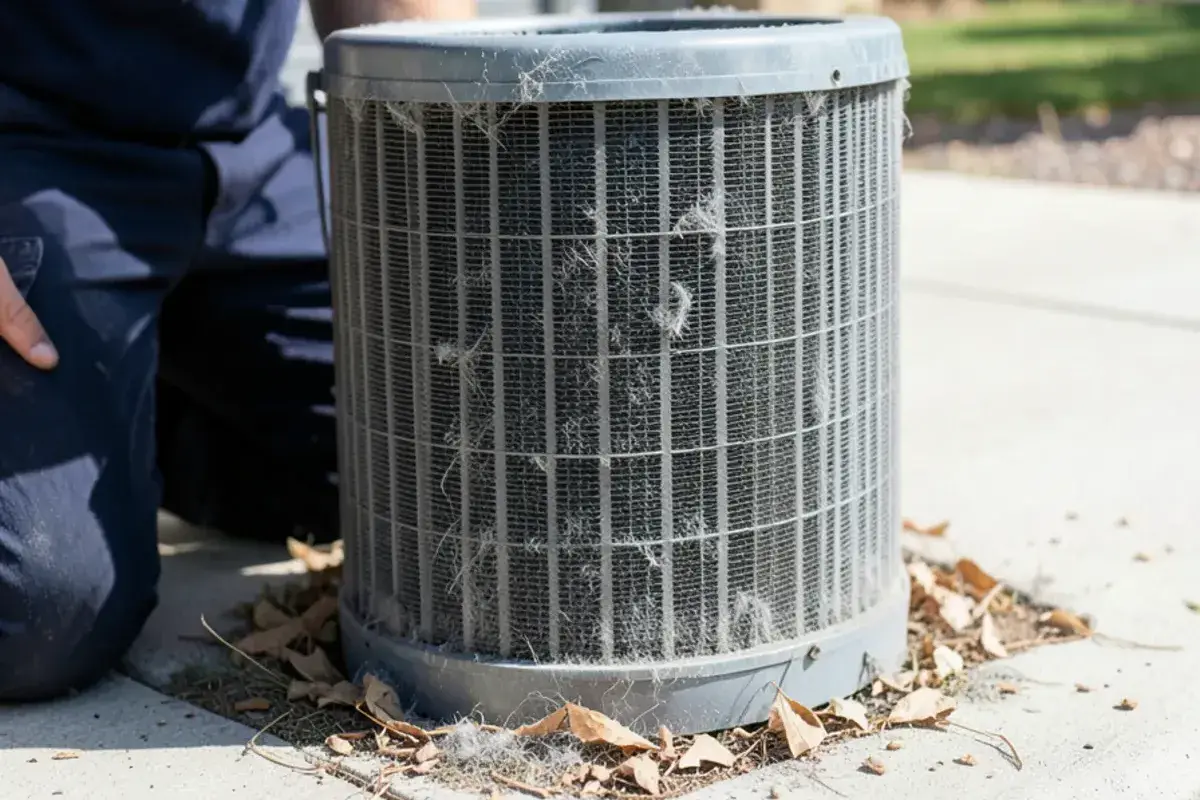
The condenser coil dumps your home’s heat outside. Dust, lint and leaves block that transfer, and head pressure climbs. Cooling fades on the hottest afternoons first. With power off at the disconnect, rinse it gently with a garden hose. Heavy buildup calls for a proper cleaning during an AC tune-up.
Refrigerant is leaking
An AC recirculates its refrigerant in a closed loop, so a low reading points to a leak. Signs include ice on the line, long run times and a hiss near the coil. DOE’s advice is to have a trained technician repair the leak and recharge the system. A top-off with no leak repair sends you back to the same problem.
Ducts are leaking or disconnected
If the unit is cooling but one room runs warm, suspect the ducts. A torn or fallen duct in a hot attic dumps cold air into the attic, and leaks on the return side pull hot attic air in. This is common in older houses, and South Gate’s median build year is 1952. Our guide to signs of leaking ductwork shows what to look for.
How can you narrow it down?
One quick walk outside tells you a lot. Stand at the outdoor unit while the thermostat calls for cooling, then match what you find to the table.
| What you see | Likely cause | Next step |
|---|---|---|
| Outdoor fan and compressor silent | Cause 1 or 3 | Check the thermostat, breaker and disconnect |
| Outdoor unit hums, fan will not spin | Cause 4 | Shut off and call |
| Weak airflow, ice on the line or coil | Cause 2 or 6 | Change the filter, thaw, then retest |
| Unit runs, air barely cool on hot days | Cause 5 or 6 | Clean the coil, then call if no change |
| Most rooms cool, one or two warm | Cause 7 | Ask for a duct check |
Is the air really warm, or just not cold enough?
A kitchen thermometer settles this. Run cooling for 15 minutes, then read the air at a return grille and at the nearest supply register. A healthy system usually drops the air by about 15 to 20°F, as a rough rule. Almost no drop points to the power, the thermostat or the compressor. A small drop points to airflow, the coil or the charge.
Timing helps too. Warm from the first minute suggests an electrical fault. Cool in the morning and warm by mid-afternoon suggests a dirty coil or a low charge. Cool for an hour, then weak airflow, suggests a coil that is freezing.
Two causes outside the top seven
- A clogged condensate drain. On many systems a float switch in the pan cuts cooling before water overflows, and the blower may keep moving warm air. Look for standing water at the indoor unit.
- A heat pump stuck in heating. A heat pump uses a reversing valve to switch modes. If that valve sticks, it can send warm air in summer. Confirm Cool mode first, then see our AC repair page.
Who fixes what, and what shapes the bill?
| Cause | Who handles it | What the cost depends on |
|---|---|---|
| Thermostat, filter or one breaker reset | You | Batteries or a filter, if anything |
| Capacitor or contactor | Technician | The part and a short labor call |
| Dirty outdoor coil | You for a light rinse, technician for heavy buildup | The coil’s condition |
| Refrigerant leak | Technician | Finding the leak, the repair and the recharge |
| Ducts | Technician | Attic access and the length of the damage |
Homeyou’s 2026 guide lists typical AC repair in South Gate at $338 to $487, and we quote our own price once the fault is found. Our AC repair cost guide explains what moves that range.
What if your old system uses R-22?
You still have options. EPA says it does not require homeowners to replace existing equipment, and that reclaimed R-22 stays available for service. It also warns that alternative refrigerants will not work well without changes to system components. Ask for the repair price and the replacement price side by side.
When is the problem the compressor?
The compressor is often the last link in this chain. Ignored heat, low charge and repeated hard starts wear it out. A technician confirms it with electrical readings and refrigerant pressures, and does not guess from the sound. If it has failed, compare the repair against replacing the system. Our guide to repairing or replacing an old AC lays out that decision.
Who can you call for warm air in Huntington Park or South Gate?
Proair works from Paramount Boulevard in South Gate and also serves Huntington Park, Downey and nearby cities. We diagnose the fault, explain it in plain words and give you the price first. Our hours are Monday to Saturday, 9 to 5. As of October 30, 2026, our Google profile shows 4.8 stars from 16 reviews.
Over half of Huntington Park’s housing predates 1960, so the attic and return checks count there as much as in South Gate. A warm-air visit runs in this order.
- Confirm the call for cooling at the thermostat and power at both units.
- Measure the temperature drop and check the filter, coils and airflow.
- Test the capacitor, contactor and motors with a meter.
- Read the refrigerant pressures, and look for a leak if they are low.
- Explain the fault, give the price, then retest after the repair.
Warm air is a symptom, so find the cause first
Try the first three causes, take the two temperature readings and walk outside. If cooling is still gone, leave the system off, because a modest fault can become a compressor bill if it keeps running. Call us with what you saw. We will find the real cause, explain it plainly and give you the price before any work starts.
Sources
AC Blowing Warm Air questions
Why is my AC blowing warm air but the outdoor fan is running?
A running fan with warm air inside usually points to a compressor that is not pumping, a low refrigerant charge or a very dirty outdoor coil. The fan and compressor are separate circuits, so one can run while the other has stopped. Shut cooling off and call. A technician will read pressures and amps to separate these causes.
How long should my AC be off to thaw a frozen coil?
Plan on a few hours with cooling off and the fan on. A thick block of ice can take most of a day. Do not chip at the coil, because the fins and tubing bend easily. Put towels down near the indoor unit for the melt water. If the coil freezes again after a new filter, you likely have a leak or an airflow fault.
Can a dirty filter make a South Gate AC blow warm air?
Yes, and it is one of the cheapest fixes on this list. Blocked airflow freezes the indoor coil, and the air then comes out warm and weak. Long run times through a South Gate late summer can load a filter faster than you expect. Check it monthly in cooling season and change it when it looks gray.
Why is my AC blowing warm air after a power outage?
Usually a short delay or a tripped breaker. Many controls hold the compressor off for a few minutes after power returns, and the blower can move warm air during that wait. Give it several minutes, then check the breaker once. If the outdoor unit still will not start, turn cooling off and call for a test of the capacitor and contactor.
Can an old R-22 air conditioner still be repaired when it blows warm air?
Yes. EPA does not require homeowners to replace existing equipment, and units built before 2010 can still be serviced with R-22. EPA also asks owners to have leaks found and repaired instead of topping off. If the same system needs a compressor or a new coil, price a replacement beside the repair before you approve the work.
Still blowing warm air?
Call Proair and tell us what the outdoor unit is doing. We will find the fault and give you a clear, upfront quote before any work begins.
- CSLB C-20 #776028
- 4.8 from 16 Google reviews
- Shop in USA Business Park
- Open Mon to Sat, 9 to 5
Related services
Helpful reading
Areas we serve