
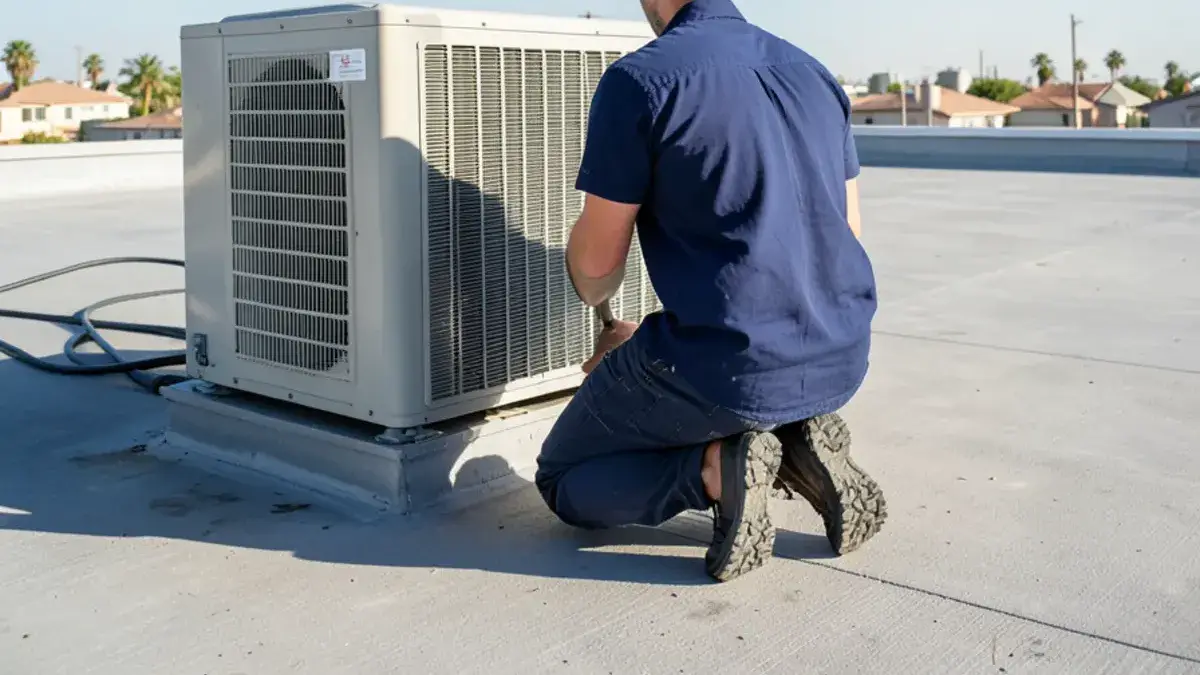
Commercial and property managers
Preventive HVAC Maintenance Checklist for Property Managers
A commercial HVAC maintenance checklist runs on fixed intervals: quick looks each week, filters monthly or quarterly, a fuller service each quarter, and a deep inspection every year. Log all of it. In California the log is more than good practice, because Cal/OSHA requires employers with mechanically ventilated buildings to keep HVAC inspection records for at least five years.
- CSLB C-20 #776028
- 4.8 from 16 Google reviews
- Shop in USA Business Park
- Open Mon to Sat, 9 to 5
By Proair Air Conditioning Services, CSLB C-20 License #776028. Published October 30, 2026. Updated October 30, 2026.
The commercial HVAC maintenance checklist by interval
This schedule draws on a sample checklist for unitary and rooftop equipment published through the federal O&M Best Practices program at Pacific Northwest National Laboratory, plus ENERGY STAR contract guidance. Manufacturer instructions come first. Dusty sites and long operating hours call for shorter intervals.
| Interval | Tasks | Who |
|---|---|---|
| Weekly | Confirm units run without odd noise or vibration. Check outdoor air intakes for obstructions. Look for weather or vandalism damage. | Building staff |
| Monthly | Check filters on busy or dusty sites and replace as needed. Walk tenant spaces for comfort complaints and record them. | Staff or technician |
| Quarterly | Check filters, belts, dampers and actuators. Check supply air temperature, thermostats and controller setpoints. Clean fans and cabinet interiors. Look for duct leaks, damaged insulation, moisture or musty odors. Check roof and wall penetrations. | Technician |
| Annually, before cooling | Clean coils and straighten fins. Flush the drain and pan. Check compressor amperage, refrigerant lines, fan motors and electrical connections. Confirm three-phase power is balanced. | Technician |
| Annually, before heating | Inspect flue, inducer and ignition. Test safety shutoff. Check the heat exchanger for cracks and rust. Check gas pressure, draft and combustion. Confirm heat pump mode and reversing valve. | Technician |
| After each visit | Log the date, the technician, the findings and the action taken. | Manager |
Managing rooftop units near South Gate? Call us.
Send your unit list and tell us what has been failing. Ask for a clear, upfront quote on the scope you need.
- CSLB C-20 #776028
- 4.8 from 16 Google reviews
- Shop in USA Business Park
- Open Mon to Sat, 9 to 5
What does California require you to keep on file?
Cal/OSHA's Title 8, Section 5142 covers mechanically driven HVAC systems that provide minimum building ventilation. It requires the system to be maintained and operated to deliver at least the outdoor air the building code required when the permit was issued.
- Inspect the HVAC system at least once a year, and correct problems in a reasonable time.
- Record each inspection or maintenance activity in writing: who did it, the date, the findings and the actions taken.
- Keep those records for at least five years.
- Make them available within 48 hours when Cal/OSHA, affected employees or their representatives ask.
The duty falls on employers, so a landlord, a tenant or both may hold it depending on the lease and who controls the system. Have your attorney confirm that. Outdoor air intakes, dampers and economizers deserve real attention here, because a stuck damper can quietly starve a building of fresh air.
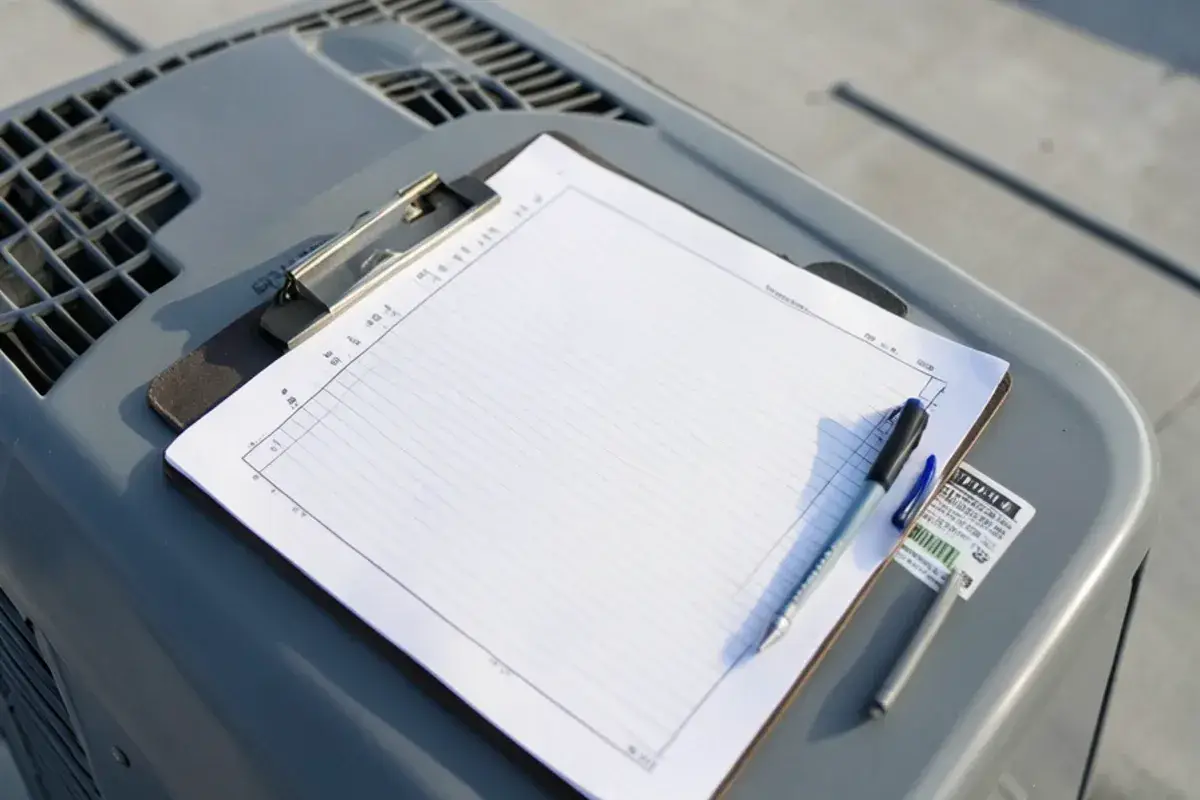
What a useful log holds
- A number and roof-map location for every unit
- Make, model, serial, tonnage and refrigerant
- Filter sizes and quantities for each unit
- Readings from each visit, not only a checkmark
- Open issues, with a date for the fix
When a unit fails in a workplace
Two more rules bear on a stopped unit. Section 5142 says the system runs continuously during working hours, with exceptions that include scheduled maintenance and emergency repairs, so log why a unit was down. Title 8 Section 3396, the indoor heat rule, covers indoor work areas at 82°F or above with employees present. Its fuller controls start at 87°F, or 82°F for restrictive clothing or high radiant heat, and they include temperature records by date, time and location. Ask your safety advisor how this fits each tenant.
When should each visit land around South Gate?
Set the calendar by the local climate. Best Places estimates only about 9.6 days a year above 90°F for South Gate, yet highs reach the mid-90s and cooling demand runs into October.
| Months | What to book | Why then |
|---|---|---|
| February to April | Cooling service on every unit | Coils, drains and belts get checked before the first heat spike |
| May to October | Filter and drain checks, monthly on dusty sites | Long run hours load filters, and the season runs late here |
| September to November | Heating service, plus alarm checks in dwellings | Burners and venting get looked at before regular use |
| December and January | Log review and next year’s budget | A full year of entries shows which units keep coming back |
How should you scope a maintenance contract?
ENERGY STAR warns that an owner can end up with a contract that provides too much or too little. It gives a plain example: outdoor coils in a particularly dirty environment may need cleaning two or three times a cooling season instead of once. Compare bids on the service promised, not only the monthly figure.
- Task list: each task, its frequency and which unit it covers.
- Materials: who supplies filters and belts, and what grade of filter.
- Records: a signed report after each visit, in a format your log can use.
- Exclusions: what counts as a billable repair instead of included work.
- Access: roof keys, ladders, escort rules and safe paths to each unit.
- Licensing: verify a C-20 license and the bond on the CSLB site before signing.
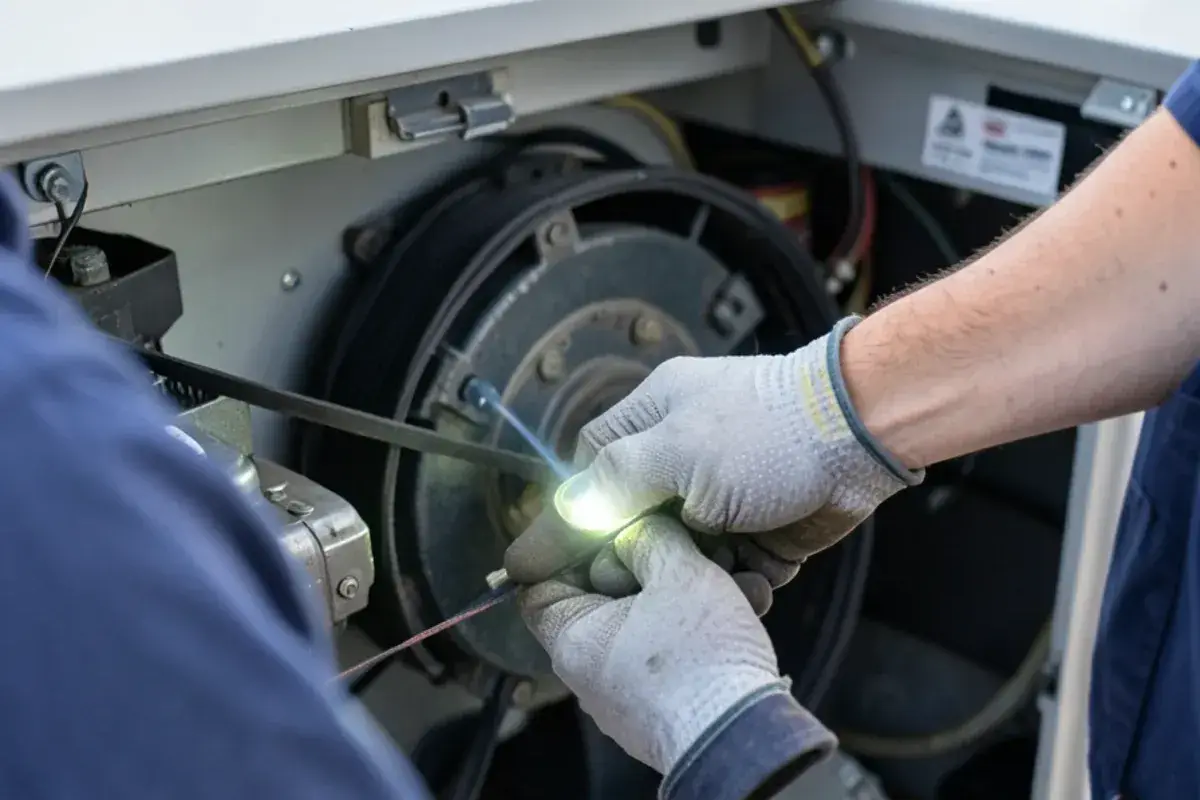
What should happen when a tenant reports a problem?
PNNL’s guidance treats discomfort, complaints and noise as possible signs of a performance problem, so give them a path into the log.
Log it
Record the suite, the time, the complaint and who reported it.
Rule out the simple things
Check the thermostat mode and setpoint, and look for blocked registers.
Match it to a unit
Use the roof map to find which unit serves that suite.
Send the history
Give the technician past complaints and the last readings for that unit.
Close it out
Write down the cause, the fix and the date, then tell the tenant. A suite that keeps returning to the list needs a deeper look at airflow and controls.
What belongs on your seasonal plan?
Three items sit outside the routine table, and each one is easier to plan ahead than to handle in a rush.
Smoke events
EPA advises building operators to check whether systems can take a higher-efficiency filter, with MERV 13 or higher recommended during smoke events. It also suggests stocking filters ahead of time and adding a pressure gauge on at least one air handler, so you can see filters loading. Recirculation advice written for houses does not transfer directly to commercial systems, so plan this with your technician.
Refrigerant leaks
EPA rules set leak repair requirements for appliances with a full charge of 15 pounds or more of an HFC, with compliance from January 1, 2026. EPA has said it will reconsider the 2024 rule, so check current status. Record the full charge on each unit in your log, and keep every recharge and leak repair in writing.
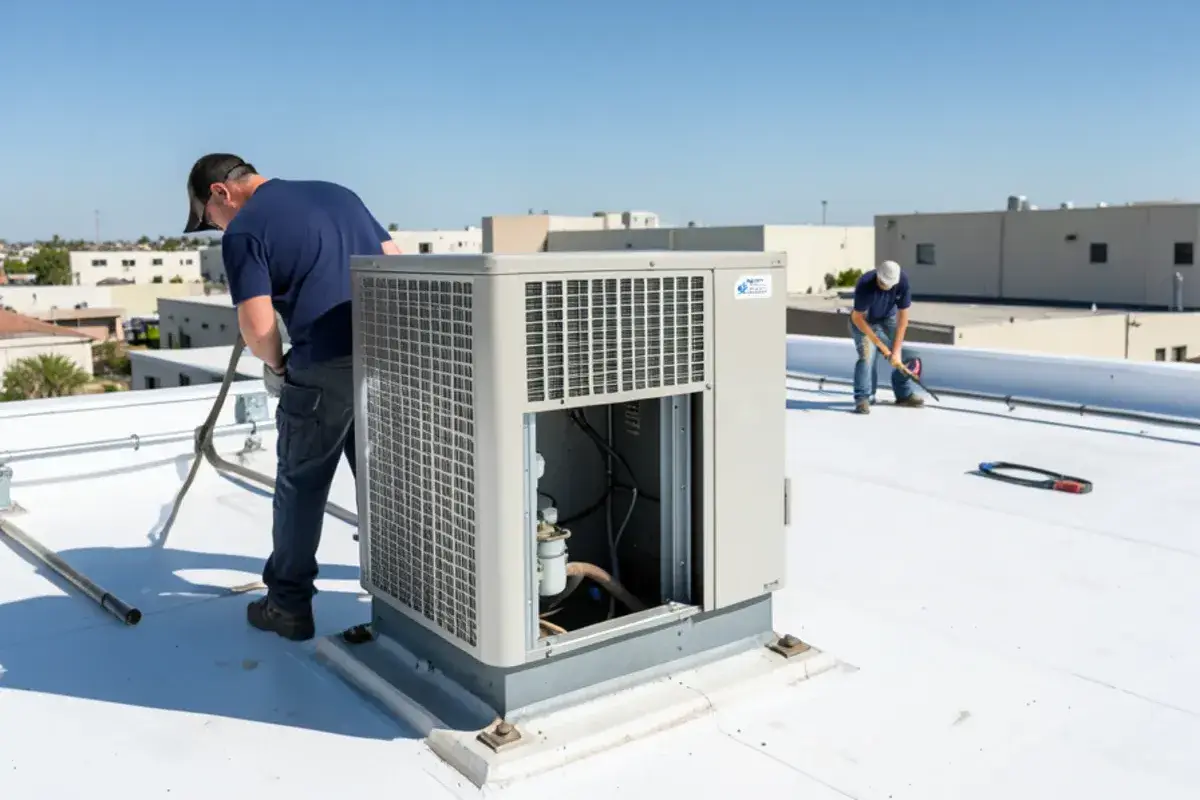
Aging equipment
Use the log to spot the units that keep coming back. Repeated compressor faults, rusted cabinets and hard-to-find parts are the signal to start budgeting, and our rooftop unit replacement planning guide walks through the lead work. Plan it before the unit forces the decision.
What about apartments and mixed-use buildings?
Residential units add tenant rules. Civil Code 1941.1 lists heating among habitability items, and cooling is not on that list. California also requires carbon monoxide alarms in dwellings with fuel-burning appliances, so add alarm checks to your annual walk-through. Local rules are moving on indoor heat, so have counsel check what applies to each property.
What to check when a unit turns over
A vacant apartment is the easiest time to get at the equipment, so put these on the make-ready list.
- Fit a new filter and write the date on the frame.
- Run cooling and heating, and confirm the thermostat responds in both modes.
- Test the carbon monoxide alarm where the home has fuel-burning equipment.
- Look for stains on the ceiling below any attic unit, and check the drain pan.
- Photograph the nameplate and add it to the log.
- Tell the new tenant who supplies filters and how often to check the HVAC filter.
For more detail, see our pages on commercial HVAC maintenance, rooftop unit service and commercial repairs around South Gate and Bell Gardens.
A checklist only works if someone owns it
Give each building one owner for the log, one date for each visit and one list of open issues. The interval table says what to do, and the records prove it was done. If you want a technician to put real readings against that list, call us. We will check the units, explain what we find and give you the price before any work starts.
Sources
- Cal/OSHA: Title 8, Section 5142
- Cal/OSHA: Title 8, Section 3396, Heat Illness Prevention in Indoor Places of Employment
- Pacific Northwest National Laboratory: Unitary HVAC Equipment, O&M Best Practices
- ENERGY STAR: Operations and Maintenance Service Contracts
- U.S. EPA: Wildfires and Indoor Air Quality in Schools and Commercial Buildings
- AirNow: Wildfire Smoke, A Guide for Public Health Officials
- U.S. EPA: Regulatory Actions for Managing HFC Use and Reuse
Property Manager HVAC Checklist questions
How often should rooftop units be serviced at a commercial property?
Plan on quarterly technician visits for most light commercial rooftop units, with heating and cooling checks timed before each season. Weekly walk-bys catch noise and damage between visits. Busy restaurants, dusty industrial sites near the 710 and long operating hours may need more. Cal/OSHA sets the legal floor for covered systems at an annual inspection, recorded in writing.
Who is responsible for HVAC maintenance in a commercial lease?
The lease decides, and it varies. Some leases put routine service on the tenant and major replacement on the landlord. Others keep both with the owner. Read the HVAC clause before you set up a schedule, and make sure one party holds the records. An attorney should answer any question about who carries a legal duty, including the Cal/OSHA recordkeeping rule.
Can building staff change the filters on a rooftop unit?
Yes, if they have safe roof access and you have approved the work. Filters are routine, but the job means a hatch or ladder and an open cabinet, so shut the unit off at its disconnect first. Keep the sizes and quantities in the log for each unit. Belts, coils, electrical checks and refrigerant stay with a technician.
How long should a South Gate property manager keep HVAC records?
At least five years where Cal/OSHA Section 5142 applies. That rule covers mechanically driven systems that supply minimum building ventilation, and records must be available within 48 hours of a proper request. Keep refrigerant tickets and replacement paperwork in the same folder, so a lease question or a City of South Gate permit file can be answered from one place.
Need a maintenance schedule built around your buildings?
Call Proair for a clear, upfront quote. We are open Monday to Saturday, 9 to 5.
- CSLB C-20 #776028
- 4.8 from 16 Google reviews
- Shop in USA Business Park
- Open Mon to Sat, 9 to 5
Helpful reading
Areas we serve