
Cost and insurance
Does Home Insurance Cover a Broken HVAC System?
Does home insurance cover HVAC failure? It turns on the cause of loss, and the California Department of Insurance lists wear and tear among the perils usually excluded, while fire, theft and falling objects are typically covered. Your own policy decides, so read it and ask your agent, because we cannot tell you what yours covers.
- CSLB C-20 #776028
- 4.8 from 16 Google reviews
- Shop in USA Business Park
- Open Mon to Sat, 9 to 5
By Proair Air Conditioning Services, CSLB C-20 License #776028. Published October 30, 2026. Updated October 30, 2026.
Does home insurance cover HVAC? The cause of loss decides
Insurance policies pay for listed causes of damage, not for equipment that simply wore out. So the first question is never "is the AC broken?" The question is "what broke it?"
The California Department of Insurance guide says there is no substitute for reading your policy and your renewal declarations carefully. The table below shows how the department’s general lists sort common HVAC failures. It is a starting point for that reading, not coverage advice.
| Likely cause | Where it falls in CDI’s general lists | What to read in your policy |
|---|---|---|
| Fire or smoke | Typically covered | Dwelling coverage and deductible |
| Windstorm or hail | Typically covered | Wind or hail deductible, if any |
| Theft or vandalism of the outdoor unit | Typically covered | Limits and any proof required |
| Falling object, such as a tree limb | Typically covered | Dwelling coverage terms |
| Vehicle hits the outdoor unit | Typically covered | Deductible, and who was driving |
| Sudden and accidental water damage | Typically covered | Water damage wording and limits |
| Slow leak or seepage from a drain line | Generally not covered | Leak and seepage wording |
| Rats or insects in wiring or ducts | Generally not covered | Pest and vermin exclusions |
| Worn-out motor, compressor or coil | Usually excluded as wear and tear | Wear and tear, maintenance exclusions |
| Neglect or skipped upkeep | Generally not covered | Neglect and maintenance exclusions |
| Flood or earthquake | Generally not covered | Separate policy or endorsement |

Need to know what actually failed? Call us.
We diagnose the fault and explain it plainly. Your insurer decides the claim, so talk to them about coverage.
- CSLB C-20 #776028
- 4.8 from 16 Google reviews
- Shop in USA Business Park
- Open Mon to Sat, 9 to 5
Why most AC and furnace breakdowns are a different kind of problem
Most failures we diagnose are age and use: a capacitor that wore out, a compressor at the end of its life, a heat exchanger or motor that ran for years. A breakdown from normal wear is the classic case for the wear-and-tear exclusion, so plan for those repairs as an ownership cost.
Electrical events sit in a gray area. Lightning and power surges are handled differently from one policy to the next, and some insurers sell an equipment breakdown endorsement. Ask your agent which applies to you before you assume either way.
Why the ceiling may be covered when the AC is not
One event can produce two answers. Attic air handlers sit above bedrooms in many older South Gate homes, so an overflowing drain can bring down drywall. The Insurance Information Institute’s sample HO-3 form excludes wear and tear and mechanical breakdown. Its water wording reaches the cost to tear out and replace part of the building, and leaves out the system the water escaped from.
So the ceiling can be one decision and the clogged drain another. Timing counts as well, because CDI lists sudden and accidental water damage as typically covered and seepage or leaks as generally not. That form is a sample, not your contract, so have your insurer read your own wording.
What would a covered claim actually pay?
Set the deductible next to the job first. Manta’s 2026 calculator averages AC installation in South Gate at $2,976, excluding permits and taxes, and that is not a Proair price. A deductible near that figure leaves little for a claim to pay, so ask your agent how a small claim could affect your renewal.
| Term | What it means | What to ask your insurer |
|---|---|---|
| Deductible | The amount of the loss you pay first | Does a separate deductible apply to this cause? |
| Actual cash value | Replacement cost less a fair deduction for physical depreciation | How is the age of my system counted? |
| Replacement cost | New property of like kind and quality | Must the unit be replaced before you pay in full? |
| Building code upgrade | An endorsement some policies lack | Are permit and code items included? |
| Loss of use | Extra living costs when a covered peril damages the home | Does losing heat or cooling qualify? |
Age hits hardest on actual cash value. California’s claims regulations bar insurers from depreciating the labor to repair or replace covered property, apart from labor built into the price of manufactured goods, and they require any depreciation to be explained in writing.
A covered replacement still has to meet today’s rules
A covered loss does not freeze the code. The City of South Gate requires permits for mechanical improvements. Under the 2025 Energy Code, replacing a condenser, coil or air handler also brings duct sealing and ECC-Rater (formerly called a HERS rater) verification. New split ACs under 45,000 Btu/h must reach 14.3 SEER2 here, and new equipment generally uses R-454B or R-32, so an exact match for an older unit may not exist.
CDI warns that some policies do not have building code upgrade coverage. Before you accept an estimate, ask your adjuster whether the permit, the duct work and the rater are in it.
Home warranty or insurance: which one is this?
They are separate products. CDI says a home protection contract is not an insurance policy, and these contracts typically cover breakdowns of systems and appliances from normal wear and tear. They do not overlap with or replace a homeowners policy.
If you have a home warranty, read its terms on HVAC limits, pre-existing conditions and who picks the contractor. CDI licenses these companies, and it takes questions at 800-927-4357. CDI warns that home warranties carry dozens of exclusions, so read them first.
What to do if you think the damage is covered
Follow the order in CDI’s Residential Property Claims Guide. These steps help no matter how the claim turns out.
Stay safe and shut the system off
Turn off a damaged unit at the thermostat and the breaker. If you smell gas, leave and call 911 or SoCalGas from outside.
Take photos first
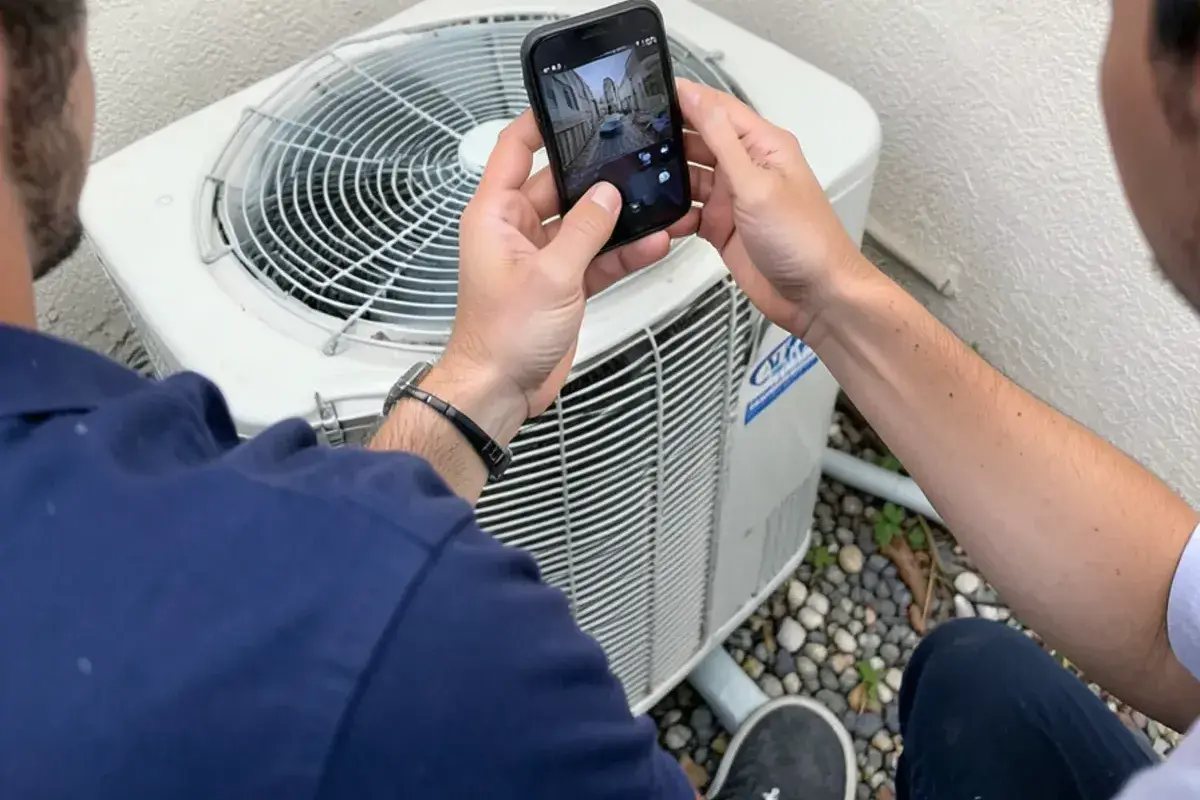
Photograph the unit, the nameplate and the surroundings before anything moves.
Report it to your insurer
Call your agent or company to open the claim. Ask whether it is covered, how long it may take and what your deductible is.
Stop further damage
Make reasonable temporary repairs and keep the receipts. CDI warns that a policy may not cover ensuing damage if you do not.
Keep the damaged parts
Hold on to them until the adjuster says otherwise, and avoid extensive permanent repairs before the inspection.
Log everything
Keep records of calls, invoices and maintenance. Service records help show the system was cared for.
What to ask a technician to record
Ask any technician who inspects the unit to note these on the invoice.
- Model and serial number from the nameplate
- The part that failed and the test that showed it
- Visible damage, such as bent coil fins, cut copper or scorched wiring
What if the claim is denied or goes quiet?
California regulations set the pace for insurers. This is general information, not legal advice.
Know the clock
Insurers must acknowledge a claim within 15 calendar days and accept or deny it within 40 days of proof of claim. If they need longer, they must say why in writing, then update you every 30 days.
Read the denial
It has to be in writing, with each reason and the policy language it relies on.
Check the stated cause
Compare it with what the technician found. If they differ, send your insurer the invoice and photos.
Call the department
If you believe you were treated unfairly, the CDI hotline at 800-927-4357 can send a Request for Assistance form.
Renters, landlords and shared equipment
In a rental, the building owner usually handles the HVAC system and insures the structure, while a renters policy is about your belongings. In rental-heavy places such as Cudahy, tell your landlord or manager right away and let them work with their insurer. Check your lease for what it says about repairs.
About 54.7% of occupied South Gate units are rented. CDI reminds renters that a landlord does not insure their personal property. A window AC you bought yourself would sit on your own renters policy, if you have one.
What should you check before you need a claim?
- Read the exclusions in your policy, along with the summary page.
- Find out if your policy pays replacement cost or actual cash value.
- Ask whether code upgrades are covered, since a required replacement may have to meet current rules.
- Keep your AC maintenance records in one folder.
- Save a photo of each unit’s nameplate.
If the repair falls on you, compare a repair against AC replacement before you decide. Our air conditioning page lists the rest of what we do.
Find the cause, then call your insurer
Insurance follows the cause, so everything starts there. Wear is an ownership cost. Fire, theft, a falling limb or a sudden flood may be a claim, subject to your policy, your deductible and your insurer’s decision. Confirm all of it with your agent before you plan around a payment. Call us for the first part: we will find what failed, explain it plainly and give you the price before any work starts, so you take facts to that conversation.
Sources
- California Department of Insurance: Residential insurance for homeowners and renters
- California Department of Insurance: Residential property claims guide
- California Department of Insurance: Home protection contracts
- California Code of Regulations: 10 CCR 2695.5, acknowledging claims
- California Code of Regulations: 10 CCR 2695.7, settlement standards
- California Code of Regulations: 10 CCR 2695.9, depreciation and labor
- Insurance Information Institute: Sample HO-3 policy form
- NAIC: A shopping tool for homeowners insurance
- Manta: Air conditioning installation cost calculator, South Gate (2026)
- California Energy Commission: 2025 Single-Family Compliance Manual, Chapter 9
- City of South Gate: Building permits and inspections
Insurance and HVAC questions
Is a stolen condenser covered by home insurance in Cudahy or South Gate?
Theft is on the California Department of Insurance list of perils typically covered, but your policy sets the terms, limits and deductible. Photograph the damage, file a police report if your insurer asks for one, and call your agent. A deductible can be close to the cost of the unit, so ask what you would actually receive.
Will my insurer pay for a new AC if my old one is too old to repair?
Age alone is the wrong trigger, because policies respond to a cause of loss. CDI lists wear and tear among perils usually excluded, so a system that simply reached the end of its life is a poor fit for a claim. Read your own exclusions and ask your agent before you plan around a payout.
Can Proair tell me if my HVAC claim will be approved?
No, we diagnose equipment and do not interpret insurance policies. We will find the fault and explain it plainly, and you can share that with your adjuster. Coverage questions go to your agent or insurer. For general help with a claim, the California Department of Insurance consumer hotline is 800-927-4357.
Will insurance pay for a ceiling damaged by an AC drain overflow in a South Gate attic?
It may, if your policy treats the water as sudden and accidental, and your insurer makes that call. CDI lists sudden water damage as typically covered and seepage or leaks as generally not. The clogged drain itself is usually a separate question. Photograph the ceiling and the attic pan before anything gets cleaned up, then call your agent.
Is equipment breakdown coverage worth asking about for an older South Gate AC?
Yes, ask at renewal, because the sample HO-3 policy form excludes mechanical breakdown. The NAIC describes this add-on as paying to repair or replace a home system that breaks down, central air and heating included. Older South Gate systems are where the fine print counts, so ask about age limits, the deductible and power surges.
Need a clear diagnosis before you call your insurer?
Call Proair and we will find the fault and give you a clear, upfront quote. Open Monday to Saturday, 9 to 5.
- CSLB C-20 #776028
- 4.8 from 16 Google reviews
- Shop in USA Business Park
- Open Mon to Sat, 9 to 5
Related services
Helpful reading
Areas we serve