
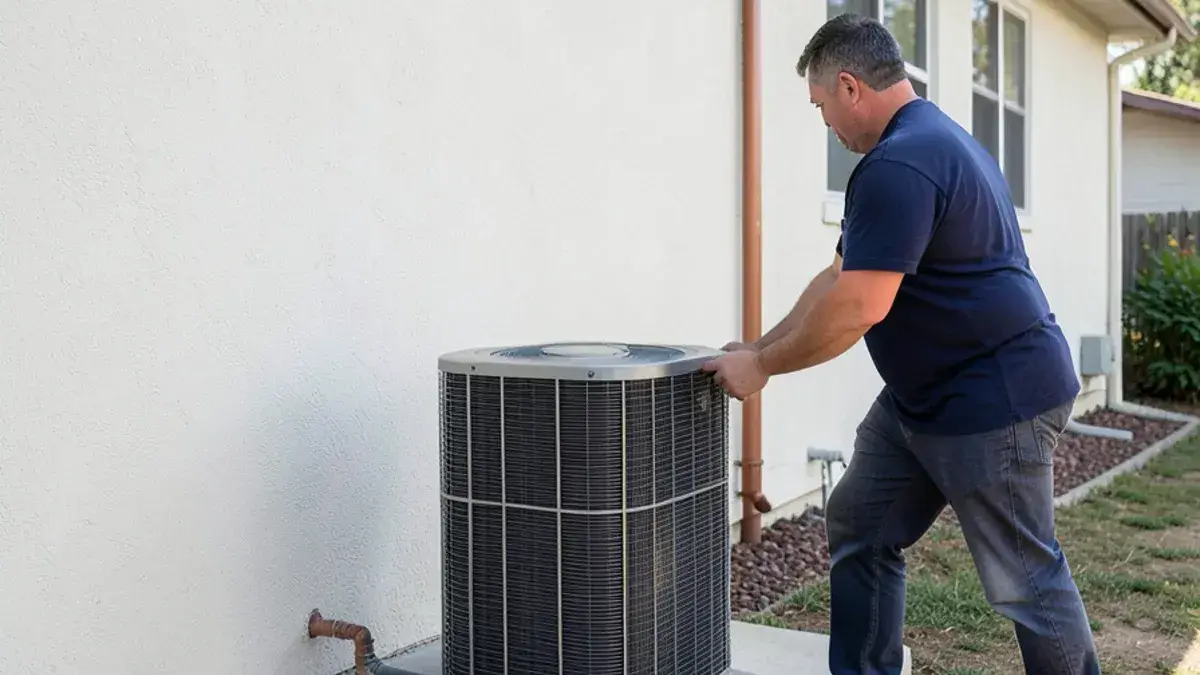
Local angles
California Energy Rules That Affect HVAC Replacement
A Title 24 HVAC replacement in California usually means a permit, a duct leakage test and a third-party check by an ECC-Rater. Under the 2025 Energy Code, existing ducts tied to the new equipment must test at 10% total leakage or less, or 7% leakage to outside. Permit applications filed on or after January 1, 2026 fall under these rules.
- CSLB C-20 #776028
- 4.8 from 16 Google reviews
- Shop in USA Business Park
- Open Mon to Sat, 9 to 5
By Proair Air Conditioning Services, CSLB C-20 License #776028. Published October 30, 2026. Updated October 30, 2026.
What counts as a change-out under Title 24?
A change-out means replacing existing equipment. The California Energy Commission treats that as an alteration, and it is the work that wakes up the duct rules. According to the CEC’s 2025 Single-Family Compliance Manual, Chapter 9, connected ducts must be sealed and verified when any one of these happens:
- An air handler is replaced.
- The outdoor condensing unit of a split system is installed or replaced.
- A packaged system is completely replaced.
- A cooling or heating coil is installed or replaced.
The outdoor unit alone is enough. The manual answers that question directly: swapping only the condenser still triggers duct sealing and verification. The Energy Code does not apply to repairs, so a capacitor or a contactor brings no duct test.
| Job | Duct test | Also expect |
|---|---|---|
| New capacitor or contactor | No, it is a repair | Nothing under the Energy Code |
| New condenser, indoor unit stays | Yes | Charge check in zone 8, setback thermostat |
| New gas furnace, AC stays | Yes, the furnace is the air handler | Ducts sealed and verified |
| New furnace and AC, all new ducts | Yes, at the 5% limit | Load calculations, filter and airflow rules |
Replacing a system in South Gate? Call us first.
Bring us your questions on sizing, ducts and scope, and call for a clear, upfront quote on your replacement.
- CSLB C-20 #776028
- 4.8 from 16 Google reviews
- Shop in USA Business Park
- Open Mon to Sat, 9 to 5
What duct leakage limits apply in 2026?
The limit depends on what is being done to the ducts. All percentages below are a share of system airflow, and they come from Chapter 9 of the CEC manual.
| Situation | Limit | If the limit cannot be met |
|---|---|---|
| Existing ducts on replaced equipment | 10% total leakage or less, or 7% leakage to outside | Seal all accessible leaks, verified by visual inspection and smoke test |
| Added duct, not a whole new system | Same 10% or 7% when testing applies | Same visual and smoke test path. Adding duct can trigger testing, so confirm with the rater |
| Ducts or equipment in a garage | 6% or less | Seal accessible garage leaks, verified by visual inspection and smoke test |
| Entirely new duct system | 5% or less | Confirm the path with your rater |
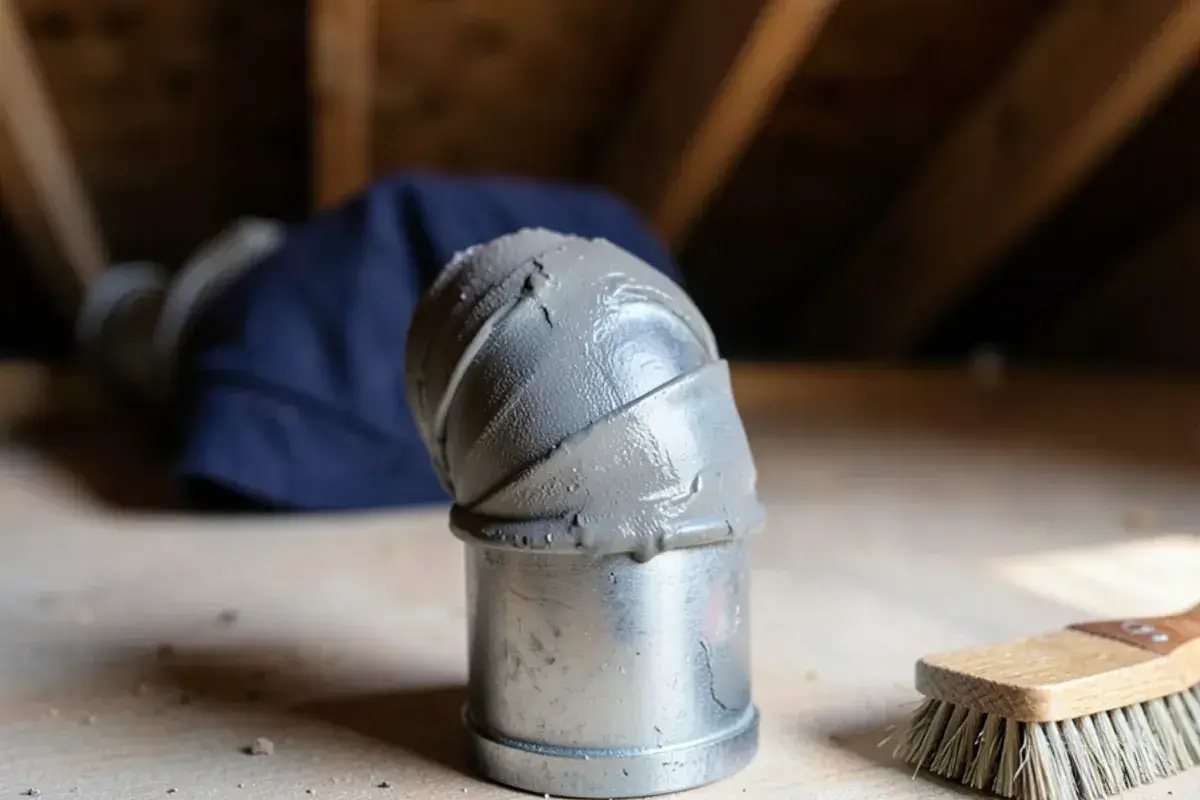
The number comes first. The rules say the leakage targets must be tried before anyone falls back to the visual inspection and smoke test. That fallback exists because some older duct runs cannot physically reach 10%. It is a path for hard cases and should not be the opening plan on your quote.
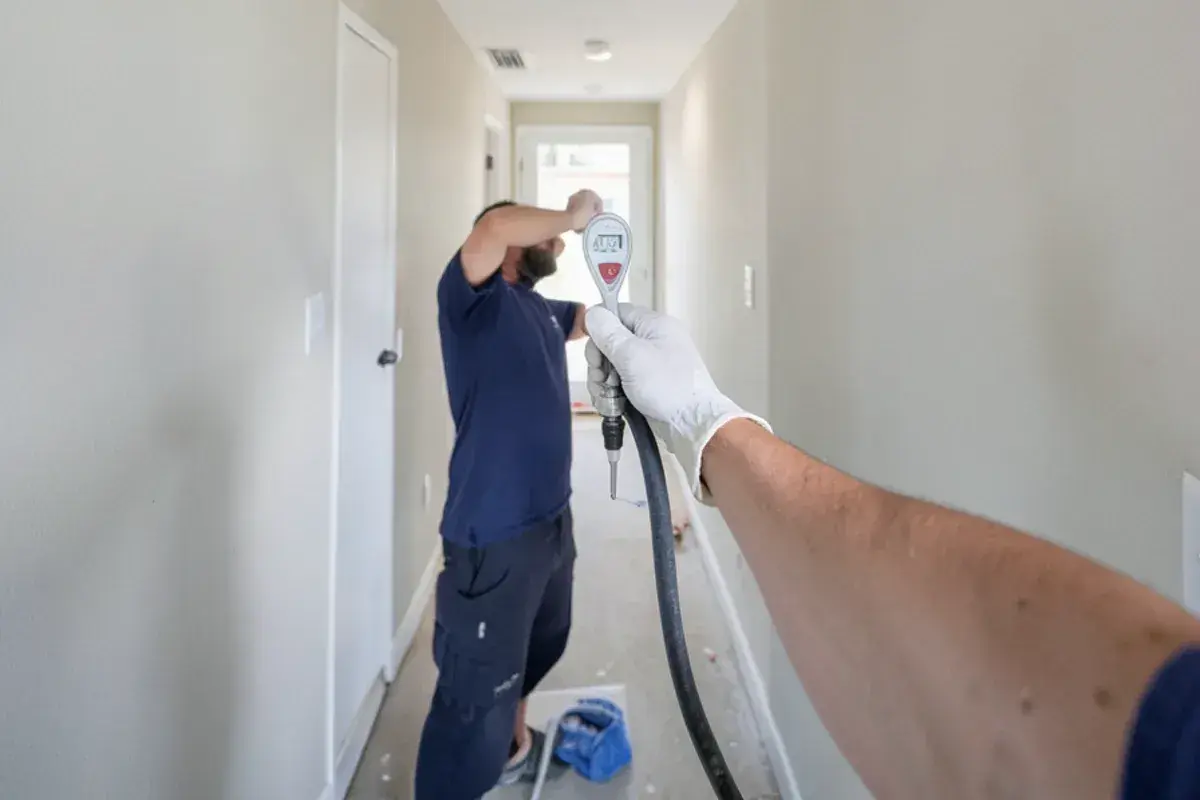
Three exceptions matter. Ducts already sealed, tested and certified by a rater are exempt. So are duct systems with less than 40 feet of duct in total, and duct systems that contain asbestos. That last one matters here, since almost half of South Gate housing dates from 1940 to 1959. Do not disturb old duct wrap to find out. Have it sampled.
Who verifies the work, and why can’t the contractor do it?
An ECC-Rater (formerly called a HERS rater) verifies it. ECC stands for Energy Code Compliance. The rater is an independent third party who tests the installed system, and contractors cannot self-certify rater-verified measures. The installer seals the ducts, and the rater confirms the result.
A certificate of compliance goes in with the permit application. When rater verification is required, that certificate must also be registered online with an approved ECC provider. In South Gate, the Building and Safety Division at 8650 California Avenue handles mechanical permits. Call (323) 563-9549 for current counter hours.
| Form | Who completes it | When |
|---|---|---|
| CF1R, certificate of compliance | The project proponent | At plan check, with the permit application |
| CF2R, certificate of installation | The installer | During the work |
| CF3R, certificate of verification | The ECC-Rater | After the rater’s test, before the final inspection closes |
The inspector checks that the required forms are completed, signed and registered. Keep copies of all three. Ducts already certified by a rater are exempt from the next test, so that paper can pay off at the next change-out.
What else does a replacement have to meet?
- Refrigerant charge check: required for heat pumps in every climate zone, and for ACs in zones 2 and 8 to 15. CEC’s ZIP list puts 90280 in zone 8.
- Thermostat: adding or replacing a refrigerant part means a digital setback thermostat.
- Sizing: Manual J is the load calculation. Capacity limits apply unless airflow is verified at 350 cfm per ton or more.
- Duct insulation: new ducts in unconditioned space need R-8 in zone 8.
- Heat source: electric resistance generally cannot be the primary replacement heat. A heat pump is the electric route. A CEC example says a 1920s house cannot swap a freestanding gas furnace for an electric wall heater.
Why the copied nameplate can fail in 2026
The capacity limit is new in the 2025 code. If airflow is not field verified at 350 cfm per ton or more, a cooling-only system can exceed the calculated cooling load by no more than 6 kBtuh, half a ton. A furnace gets the same margin over the heating load. On a small 1950s house, the old unit may be well over the calculated load. When charge verification applies, most systems must also reach at least 300 cfm per ton, and undersized returns can fall short.
One more item hides in old closets and garages: a furnace platform used as the return. A CEC example covers one moved during a replacement. The code bars platforms and building cavities from carrying air, so real duct has to take over.
Federal minimums apply on top of state code. DOE sets split ACs under 45,000 Btu/h in the Southwest at 14.3 SEER2, and 13.8 SEER2 at 45,000 Btu/h and up. Split heat pumps need 14.3 SEER2 and 7.5 HSPF2. SEER2 is the current seasonal cooling efficiency rating. On refrigerant, new equipment generally uses R-454B or R-32, but leftover R-410A stock may still be installed after EPA’s May 2026 rule. Ask which refrigerant the quote specifies.
What should a Title 24 HVAC replacement quote include?
The permit
Who pulls it, and which agency issues it. In Downey, Lynwood and other cities, the local building department handles it.
The load calculation
A Manual J for your house, not a match to the old nameplate. Manual S then selects the equipment.
The duct scope
Sealing, testing and what happens if the ducts cannot reach the limit. Ask about duct repair as a separate line.
The rater
Who hires the ECC-Rater and when the test happens. Ask for the registered results when the job closes.
The license
HVAC work calls for a C-20 license. Check the number on the CSLB site. Any job over $1,000, or one that needs a permit, requires a licensed contractor.
Pricing a new system? Start with our AC replacement page. If you are also weighing keeping the old unit, read when an old AC is not worth fixing. Furnace owners should see furnace replacement, because the same duct rules can apply when an air handler or heating coil changes.
What does skipping the permit actually cost?
A no-permit discount can cost more than it saves. Without a permit, nobody closes the job and the rater’s test has no record behind it. The SoCalGas 2026 home rebate also asks for proof the permit closed before it pays on a furnace. Think twice before you sign the application yourself, too. CSLB says an owner-builder is responsible for all phases of the project.
Reading the rules as a South Gate homeowner
The code boils down to three questions. Does the job touch the equipment or only a part? Are the ducts in the quote? Who signs that the work passed? A quote that leaves one of those blank is not finished. Call us before you sign. We will look at the system and the ducts, explain what the job needs and give you a clear, upfront quote before any work starts.
Sources
- California Energy Commission: 2025 Single-Family Compliance Manual, Chapter 9
- California Energy Commission: Building Climate Zones by ZIP Code
- CSLB: AB 2622 Implementation Bulletin
- CSLB: Check a License
- City of South Gate: Building Permits and Inspections
- ACHR News: EPA final rule on R-410A installations
- California Energy Commission: 2025 Single-Family Compliance Manual, Chapter 2
- California Energy Commission: Blueprint newsletter, Winter 2026
- CSLB: Owner-builder responsibilities
- SoCalGas: 2026 Home Energy Efficiency Rebate application
Energy Rules for HVAC Replacement questions
Does replacing only the outdoor AC unit trigger a duct test in California?
Yes. The CEC manual says replacing the outdoor unit by itself triggers duct sealing and rater verification, even if the indoor unit stays. The usual exceptions still apply, such as ducts already tested and certified, systems under 40 feet of duct, and duct systems containing asbestos. Ask for the duct scope on the quote so it does not appear as a surprise later.
What happens if old South Gate ducts cannot reach 10% leakage?
The rules offer a fallback. Once the test has been tried, all accessible leaks must be sealed, and an ECC-Rater verifies that with a visual inspection and a smoke test on your house. In a tight South Gate attic, the local enforcement agency has the final say when it is unclear whether a duct counts as accessible.
Do I need a permit to replace a furnace or AC in South Gate?
Yes, plan on one. The City of South Gate says permits are required for improvements to mechanical systems, and rater-verified measures tie back to that permit. Contact Building and Safety at (323) 563-9549. Ask any contractor to state in writing who pulls the permit, and do not accept a plan to skip it.
Does a new gas furnace in South Gate need a duct test if the AC stays?
Yes, in most cases. The CEC manual treats a gas furnace as an air handler, and replacing an air handler triggers sealing and rater verification of the connected ducts. The usual exceptions apply, including ducts already tested and certified. Ask whether the job will also replace the cooling coil above the furnace, since that adds its own rules.
Who signs the CF3R on a California AC replacement?
An ECC-Rater signs it. The CF3R is the certificate of verification, and the CEC manual says it comes from a rater certified through an approved ECC provider. Your installer signs the separate CF2R, because contractors cannot self-certify rater-verified measures. Ask for a copy of the registered CF3R when the job closes, and keep it with your permit records.
Planning a change-out this year?
Call Proair for a clear, upfront quote, and ask us to walk through the duct scope and what the code expects on your house.
- CSLB C-20 #776028
- 4.8 from 16 Google reviews
- Shop in USA Business Park
- Open Mon to Sat, 9 to 5
Related services
Helpful reading
Areas we serve